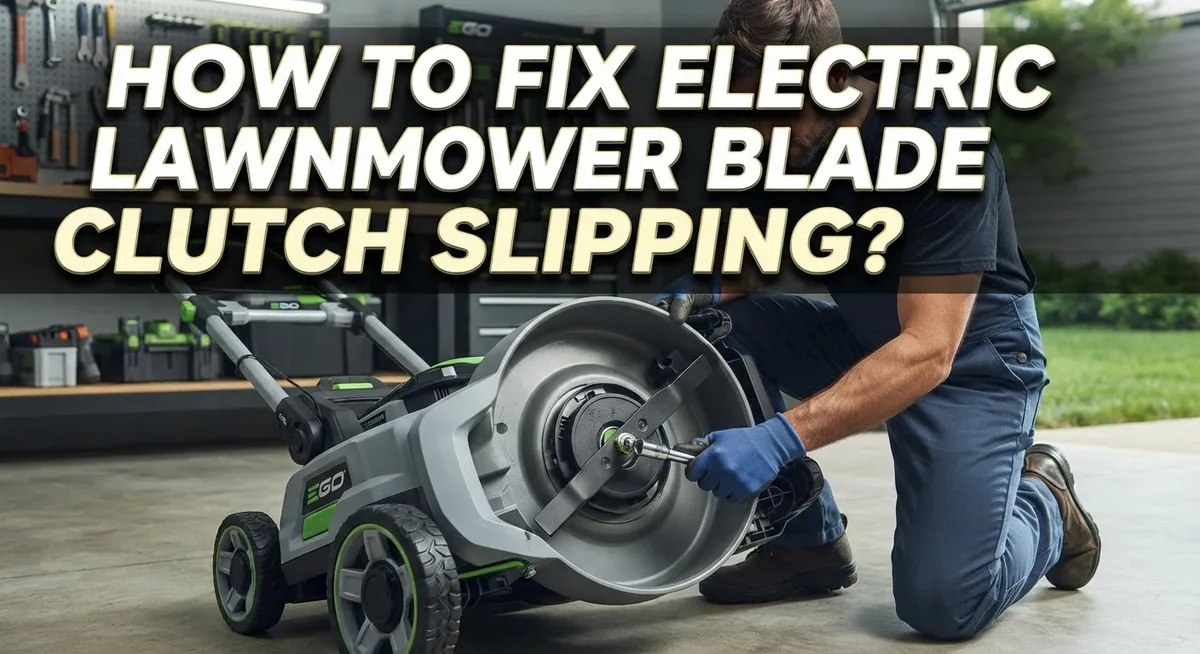
How To Fix Electric Lawnmower Blade Clutch Slipping?
Does your electric lawnmower blade spin slower than it should? Or maybe it stops completely when you push through thick grass?
This is a classic sign of blade clutch slipping. It happens when the clutch cannot fully engage the blade under load.
The good news is that you do not need to be an expert to fix this. Most causes come down to simple issues like loose wiring, low battery voltage, or a worn clutch cable.
Sometimes the problem only shows up when the mower gets hot. This makes it tricky to diagnose, but not impossible.
In a Nutshell
- Turn off and disconnect the battery first. Safety always comes before any repair work on your mower.
- Open the clutch cover and remove the wiring harness clip. This gives you access to the clutch assembly for inspection.
- Check the clutch parts for wear. Look for damage, dirt, or loose components that stop proper engagement.
- Test your electrical system. Check the battery voltage, wiring, connectors, and ground connections for any faults.
- Inspect the clutch cable and lever. Look for fraying, looseness, or bad alignment that can cause slipping.
- Check belt drag and deck resistance. Extra resistance can make the clutch struggle under load.
- Watch for temperature-related issues. Some clutches work fine when cold but slip once the mower heats up.
Understanding the PTO Clutch and How It Works
The PTO clutch is the component that connects and disconnects your blade from the engine or motor. Think of it like a switch that turns blade rotation on and off. When you engage the blade lever, the clutch engages. When you release it, the clutch disengages and the blade stops spinning.
Here’s how it works in practice. Your electric motor provides constant power to the mower deck. The PTO clutch sits between the motor and the blade shaft. When engaged, the clutch locks these two parts together through friction or magnetic force. Power flows from the motor through the clutch to spin your blade.
When the clutch is slipping, it means the connection between the motor and blade is not strong enough. The motor spins, but the blade does not spin as fast as it should. Or the blade might not spin at all. This happens because the clutch cannot create enough friction or magnetic force to transfer the motor’s power to the blade.
Temperature plays a big role here. Many clutches work fine when cold but slip once they warm up. The internal components expand or the electrical connections weaken as heat builds up. This is why your blade might work perfectly at the start of mowing but slip halfway through.
Understanding this basic function helps you diagnose the problem. If your blade slips under load, the clutch is not engaging fully. If it slips only when hot, you have a temperature issue. If it never engages, you likely have an electrical problem. Knowing which scenario matches your situation guides your repair approach.
Signs and Symptoms of a Slipping Blade Clutch
Your electric lawnmower sends clear signals when the blade clutch starts to slip. Learning to spot these signs early helps you fix the problem before it gets worse.
The most obvious symptom is reduced blade speed under load. You push the mower through thick grass, and the blades slow down or stop spinning even though the motor keeps running. This happens because the clutch cannot grip the blade shaft properly.
Listen for unusual sounds from the deck area. A slipping clutch often makes a whining, chirping, or squealing noise. This sound means the clutch plates are rubbing against each other without full engagement. The noise typically gets louder when you hit dense patches of grass.
Feel the vibration pattern during operation. Normal mowing produces steady vibration. A slipping clutch creates irregular shaking or pulsing sensations through the mower handle. This vibration increases when you encounter resistance.
Pay attention to performance that changes with temperature. Your mower might work perfectly when you first start it cold. After 10 or 15 minutes of use, the blade slows down or stops engaging. This temperature dependent behavior is very common with failing clutches.
Check for visible signs of wear on the deck. Look underneath after mowing. You might see burn marks, discoloration, or debris around the clutch area. These marks indicate excessive friction and heat.
Notice if the blade engagement lever feels loose or unresponsive. When you engage the blade control, it should feel solid and immediate. A spongy or delayed response suggests internal clutch problems.
Burning smells coming from the deck area are serious warnings. This indicates the clutch is overheating from constant slipping. Stop using the mower immediately when you detect this smell.
Safety Precautions Before You Begin Diagnosis
Before you start diagnosing a slipping blade clutch, your safety comes first. Working with electric lawnmowers requires careful preparation to prevent injury.
Disconnect the battery completely. This is the most important step. Remove both the positive and negative battery cable terminals. Wait a few minutes to let any residual electrical charge drain from the system. This prevents accidental motor startup while you work.
Wear safety gear at all times. Use work gloves to protect your hands from sharp blade edges and metal components. Safety glasses shield your eyes from debris and dust. Wear closed toe shoes with good grip in case you need to move quickly.
Let the mower cool down first. If the mower ran recently, the engine and clutch assembly will be hot. Wait at least 30 minutes before touching any components. Hot metal causes serious burns.
Clear your work area. Move the mower to a flat, well lit space away from children and pets. Remove any obstacles that could cause you to trip. Ensure you have good visibility of all components you need to inspect.
Gather your tools beforehand. Have a multimeter, socket set, and basic hand tools ready. Knowing where everything is prevents frustration during diagnosis.
Never work under the mower without proper support. If you need to access the underside, use jack stands or blocks. Never rely on a jack alone.
Read your owner’s manual. Different mower models have different clutch designs and safety procedures. Your manual contains specific warnings for your machine.
Taking these precautions protects you from electrical shock, burns, cuts, and crushing injuries. You can then safely move forward with your diagnosis.
Step-by-Step Guide to Diagnosing Clutch Slippage
Start your diagnosis by checking the battery voltage. A weak battery cannot deliver enough power to engage the clutch properly. Use a multimeter to measure the voltage across the battery terminals. Compare this reading to your mower’s specifications. If voltage is low, charge the battery fully and test again.
Next, inspect all electrical connectors. Look for loose wires, corrosion, or damaged terminals around the clutch assembly. Corroded connections create resistance that prevents proper clutch engagement. Clean any corroded terminals with a wire brush. Reconnect all wires firmly until they click into place.
Test the ground connections carefully. A poor ground connection is a common cause of clutch slipping. Trace the ground wire from the clutch to the battery. Ensure it connects securely at both ends. Wiggle the connections gently while observing if the problem changes.
Check the wiring harness for damage. Look for cuts, pinches, or burns in the insulation. Damaged wiring cannot carry the full electrical current needed for clutch engagement. If you find damaged sections, the wiring needs replacement.
Listen for clicking sounds when you press the blade engagement lever. A clicking noise indicates the clutch solenoid is trying to engage but cannot hold. This suggests an electrical issue rather than mechanical wear.
Verify the clutch cable is not loose or frayed. Even on electric models, some designs use cables for mechanical linkage. A loose cable prevents full clutch engagement. Tighten any adjustment bolts you find on the cable.
Document all your findings. Note which tests passed and which failed. This information helps you understand whether the problem is electrical or mechanical. Electrical issues require different fixes than mechanical wear.
Checking Electrical Connections, Voltage, and Grounding
A weak battery causes many blade clutch problems. Your mower needs full voltage to engage the clutch properly. Use a multimeter to check the battery voltage while the mower sits idle. Most electric mowers need between 12 and 48 volts depending on the model. If voltage drops below the minimum, the clutch cannot engage with enough force.
Test voltage under load by pressing the blade engagement lever. Watch your multimeter reading as you activate the clutch. Voltage should stay steady. If it drops significantly, your battery is too weak or the charging system has failed.
Next, inspect every electrical connector on the clutch system. Look for corrosion, which appears as white or green crusty buildup on metal terminals. Corrosion blocks electrical flow and causes slipping. Clean corroded connectors with a wire brush or sandpaper. Spray electrical cleaner on the terminals afterward to prevent future corrosion.
Check your ground connections carefully. The ground cable completes the electrical circuit. A loose or corroded ground connection prevents the clutch from receiving full power. Locate the ground cable running from the battery to the mower frame. Tighten any loose connections with a wrench. Clean corroded ground points with a wire brush.
Examine the wiring harness for visible damage like cuts, burns, or melted insulation. Damaged wires cannot carry electricity safely. Look where the harness runs near hot engine parts or sharp edges.
Test continuity through the wiring using your multimeter. Set it to continuity mode and touch each probe to opposite ends of a wire segment. You should hear a beep or see a reading. No beep means that wire is broken inside.
Inspecting the Clutch Cable, Linkage, and Belt Drag
The clutch cable connects your blade engagement lever to the clutch assembly. A loose or damaged cable prevents proper clutch engagement. Start by visually inspecting the cable along its entire length for fraying, kinks, or visible breaks.
Gently pull the cable by hand to check for excessive slack. The cable should feel taut but not overly tight. Locate where the cable attaches to the clutch lever and the engagement mechanism. Tighten any loose fasteners you find at these connection points.
Next, check the linkage alignment. The clutch lever should move smoothly without catching or binding. Press the blade engagement lever and watch how the linkage moves. It should travel in a straight line without twisting or rubbing against other components.
Inspect the linkage pivot points for rust or corrosion. Light surface rust can be cleaned with a wire brush. Heavy corrosion may require replacing the linkage components.
Belt drag refers to resistance in the blade drive system. Spin the blade by hand with the battery disconnected. It should rotate freely without excessive resistance. If the blade feels stuck or drags heavily, something is binding in the deck.
Check for debris wrapped around the blade shaft or pulley. Remove any grass clippings, sticks, or dirt you find. These materials cause drag and force the clutch to slip under load.
Examine the pulley and belt for wear patterns. A worn belt or misaligned pulley increases drag significantly. Look for fraying, cracking, or uneven wear on the belt surface.
Document what you find before moving forward. Take photos of any damage or misalignment. This information helps you determine whether you need cable replacement, linkage adjustment, or belt service. Proper cable tension and smooth linkage movement are essential for reliable clutch engagement.
Common Mistakes to Avoid During Repair
Repairing an electric lawnmower blade clutch requires careful attention to detail. Many people make costly errors that damage the equipment or create safety hazards. Understanding these mistakes helps you complete repairs successfully.
Never skip the diagnostic phase. Many owners jump straight to replacing the clutch without testing electrical components first. You must check voltage, connectors, and wiring before ordering parts. A weak battery or loose wire often causes slipping, not a faulty clutch.
Ignoring temperature patterns leads to incorrect diagnoses. Some clutches work fine when cold but slip when hot. This indicates an electrical issue, not mechanical wear. Document when slipping occurs to identify the real problem.
Don’t overlook ground connections. Poor grounding prevents the clutch from engaging properly. Check every ground wire and connector. Corrosion or loose terminals interrupt power flow to the clutch coil.
Rushing through the inspection process causes missed details. Take time to examine the entire clutch assembly carefully. Look for burn marks, damaged windings, or melted insulation. These signs tell you exactly what failed.
Failing to test continuity through wiring wastes hours of troubleshooting. Use your multimeter to verify electrical pathways. A broken wire inside the harness creates the same symptoms as a bad clutch.
Avoid forcing components during disassembly. Clutch bolts require specific torque values. Over tightening damages threads and housing. Under tightening allows movement that causes slipping.
Never assume the clutch is bad without eliminating electrical causes first. Most slipping problems stem from voltage drops, loose connections, or damaged wiring. Proper diagnosis saves money and prevents unnecessary replacements. Take your time, follow procedures, and verify each step before moving forward.
Troubleshooting Persistent or Recurring Slippage
When slippage keeps coming back after your initial repair, you need to dig deeper into what causes the problem to return. Temperature dependent failures are especially tricky because your clutch works fine when cold but fails once it heats up during mowing.
Start by tracking when the slipping happens. Does it occur right away or after 15 minutes of use? Does it happen on thick grass or thin patches? Write down these patterns because they reveal whether you have an electrical issue, a mechanical wear problem, or a thermal failure.
Test your battery voltage again under load. Many recurring slippage issues stem from a battery that drops below the required voltage during operation. Your clutch needs consistent power to stay engaged. If voltage dips when you engage the blades, that’s your culprit.
Next, inspect the clutch assembly itself for signs of overheating. Look for discoloration, melted plastic, or a burnt smell. These symptoms mean the clutch is working too hard and needs replacement rather than adjustment.
Check if debris is accumulating around the blade shaft or pulley. Grass clippings and dirt can cause drag that makes the clutch slip under load. Clean these areas thoroughly before reassembling anything.
Verify all your connections are tight. Loose bolts on the clutch cover or connectors vibrating free during operation will cause slipping to return. Use the correct torque specifications for each bolt.
If slipping persists after these checks, the clutch friction material itself may be worn beyond recovery. At that point, replacement becomes necessary rather than repair.
Final Thoughts
Fixing a slipping clutch takes patience and a bit of detective work. You now have the tools to spot the real problem instead of guessing.
Safety comes first in every step of this process. Always disconnect the battery before touching any clutch components.
Most slipping issues trace back to a few common culprits. Weak battery voltage, worn wiring, or loose connections cause most problems you will encounter.
Temperature matters more than people realize. A clutch that works fine cold but fails when hot points to overheating or electrical resistance issues.
Testing your electrical system saves you time and money. Many owners replace the entire clutch when a simple wire or connector was the actual issue.
Don’t ignore your cable and linkage checks either. A frayed cable or misaligned lever can mimic clutch failure without any internal damage.
Belt drag deserves your attention too. Debris and worn pulleys create resistance that looks like clutch slipping but has nothing to do with the clutch itself.
If problems keep returning, go back to basics. Recheck voltage under load and inspect for loose bolts or connections that vibrated free.
Persistent slipping after thorough checks usually means the friction material has worn out. At that point, replacement becomes your best option.
Keep a simple log of symptoms and fixes. This record helps you catch patterns faster if issues return later.
Regular maintenance prevents most clutch problems before they start. Check connections, test voltage, and inspect wear points each season.
With careful diagnosis and steady hands, you can solve most clutch slipping issues yourself. Trust the process, follow each step, and your mower will run smoothly again.
Frequently Asked Questions
Why does my electric lawnmower blade clutch slip only when the mower is hot?
Temperature affects how your clutch engages. When the mower runs, friction creates heat inside the clutch assembly. Hot clutches lose grip faster than cold ones. This happens because the friction material expands and the electrical components weaken under heat stress.
Check your battery voltage while the mower runs. A voltage drop during operation points to electrical strain. Overheating often stems from poor airflow around the clutch cover. Make sure dust and grass clippings don’t block the cooling vents. If the clutch works cold but fails hot, the friction material may be wearing out unevenly.
What electrical tests should I run before replacing the clutch?
Start by measuring your battery voltage with a multimeter. The voltage should stay steady when you engage the blade. A significant drop means your battery cannot power the clutch properly.
Next, inspect all wiring connectors for corrosion or looseness. Check ground connections especially carefully. Poor grounding prevents the clutch from receiving full electrical power. Test continuity through the wiring harness using your multimeter. A broken wire inside the harness feels solid but carries no current.
Finally, verify that your clutch lever moves freely and your linkage aligns correctly. Stiff movement or misalignment forces the electrical system to work harder than it should.
Can a loose clutch cable cause slipping?
Yes. Your clutch cable connects the lever to the engagement mechanism. When the cable stretches or loosens, the clutch cannot fully engage the blade. Inspect the cable for fraying, kinks, or visible damage. Tighten any loose connections at both ends of the cable.
A cable under tension should feel firm but not rigid. If you can move it easily by hand, tighten the adjustment bolt at the clutch housing. Small adjustments often restore proper engagement without requiring replacement.
What role does belt drag play in clutch slipping?
Your mower’s belt transfers power from the engine to the blade. When the belt drags or resists movement, it forces your clutch to work harder. Excessive drag can cause the clutch to slip under load. Spin the blade by hand when the battery is disconnected. It should rotate freely with minimal resistance.
Check that the belt sits properly on all pulleys. A misaligned or worn belt creates drag. Debris wrapped around the pulley also increases resistance. Clean the blade shaft and pulley area thoroughly before reassembling everything.

Hi, I’m Pearl Standen, the voice behind The Web Utility. I’m a passionate tech enthusiast who loves exploring the latest gadgets, smart devices, and electronics that make everyday life easier. Through my website, I share honest, well-researched reviews of trending Amazon products to help you make smarter buying decisions.