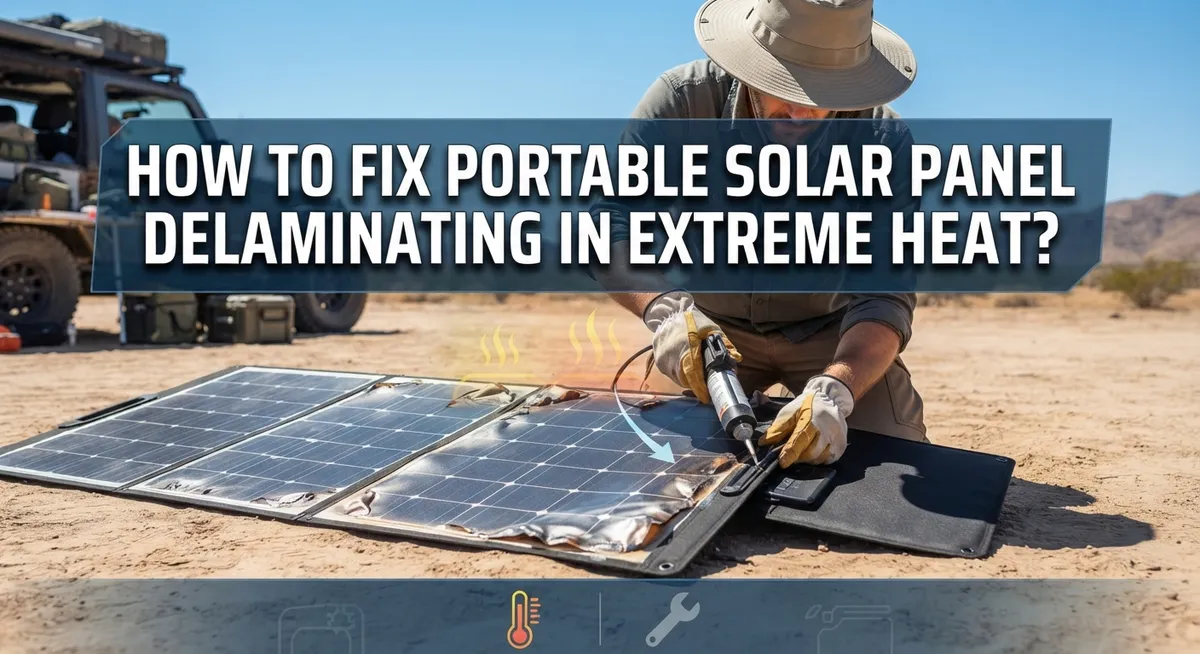
How To Fix Portable Solar Panel Delaminating In Extreme Heat?
Your portable solar panel works hard in the sun. But extreme heat can cause a sneaky problem called delamination.
You might notice bubbling or peeling on the panel surface. This happens when heat builds up and breaks down the layers inside your panel.
Delamination is not just an eyesore. It creates real safety hazards and cuts down your panel’s efficiency.
Left untreated, it can even lead to electrical failures. That means less power when you need it most.
The good news? You can spot the warning signs early. You can also take steps to fix and prevent this issue.
In a Nutshell
- Heat is the main cause of delamination. It weakens the layers bonding your panel together over time.
- Always check for cracked cells and damaged connectors first. These often mimic delamination but need different fixes.
- Proper installation matters a lot. Poor mounting technique traps heat and speeds up damage.
- Good airflow around your panel helps it stay cooler. This simple step prevents many heat related issues.
- Watch for salt buildup and corrosion, especially near coastal areas. These issues often get mistaken for coating problems.
- Don’t blame the ETFE coating right away. Most delamination issues come from installation or heat management, not the coating itself.
- Regular inspection catches problems early. Spotting bubbling or peeling sooner means simpler fixes and less risk of electrical failure.
- Testing your charge controller and checking wiring connections rules out other causes before you assume delamination is the problem.
What Is Solar Panel Delamination and Why It Happens
Solar panel delamination happens when the layers inside your panel start to separate from each other. Think of it like a sandwich where the filling peels away from the bread. This separation creates visible bubbling, peeling, or whitish spots on the surface of your panel.
Heat buildup is the primary culprit in extreme conditions. When temperatures spike, the materials inside your panel expand at different rates. The adhesive that holds everything together weakens, and layers begin to pull apart. This process accelerates in hot climates where panels sit in direct sun for hours.
Water intrusion makes the problem worse. Moisture seeps into tiny cracks or gaps in your panel’s frame. Once inside, water gets trapped between layers and causes the adhesive to fail faster. Salt buildup compounds this issue, especially if you live near coastal areas or use your panel in salty environments.
Installation mistakes also trigger delamination. If your panel wasn’t mounted correctly or lacks proper airflow underneath, heat gets trapped. Poor ventilation means the panel can’t cool down between sunny periods. This constant heat stress weakens the internal structure over time.
Cracked cells and damaged connectors accelerate delamination too. When cells crack inside the panel, stress concentrates at those weak points. Damaged connectors allow moisture to enter, which spreads the problem deeper into the panel layers.
The key point is this: delamination rarely happens overnight. It develops gradually as multiple factors combine. Heat, moisture, salt, and poor installation all work together to break down the adhesive bonds. Understanding these causes helps you prevent delamination before it starts and catch early warning signs when they appear.
Why Extreme Heat Accelerates Delamination
Extreme heat accelerates delamination because solar panels absorb intense energy from the sun. This energy converts to electrical power, but excess heat also builds up inside the panel layers. When temperatures spike, the materials expand at different rates.
The adhesive that bonds panel layers together weakens under sustained high temperatures. Manufacturers design these adhesives to handle normal heat ranges, but extreme conditions push them beyond their limits. The glue loses its grip, and layers start separating from each other.
Temperature cycling makes this worse. Your panel heats up during the day and cools down at night. This constant expansion and contraction creates stress on the internal structure. Over time, the adhesive fails, and delamination spreads across the panel surface.
Moisture trapped inside panels compounds heat damage. When water gets inside during installation or through small cracks, heat causes it to expand. This internal pressure pushes layers apart faster than dry conditions would.
Salt air near coastal areas accelerates the process too. Salt particles corrode the metal components and weaken the adhesive bonds. Combined with extreme heat, this creates a double threat to panel integrity.
Poor installation practices leave gaps where heat penetrates more easily. If your panel sits flush against a surface without airflow underneath, heat gets trapped and builds up rapidly. Proper spacing allows air to circulate and cool the panel bottom.
The critical fact: panels in desert climates or tropical regions face much higher delamination risk than panels in moderate climates. Temperatures exceeding 140°F (60°C) significantly speed up the breakdown process.
Understanding this connection helps you take action early. You can improve ventilation, monitor your panels regularly, and catch delamination before it becomes severe. Heat management directly impacts how long your portable solar panel stays functional and safe.
Troubleshooting: Diagnosing the Real Cause Before You Repair
Before you start any repair work, you need to know exactly what caused your panel to delaminate. Many people jump straight to fixes without understanding the real problem. Taking time to diagnose properly saves you money and prevents repeat failures.
Start with the visible signs. Look closely at your panel surface. Do you see bubbles forming under the glass? Are there areas where the layers are peeling apart? Note where these spots appear most. Delamination often starts at the edges first, especially near connectors or mounting points.
Check for dirt and salt buildup on your panel. In extreme heat, salt residue from ocean spray or dust accumulation can trap moisture against the surface. This moisture then accelerates layer separation. Wipe the panel clean with a soft cloth and fresh water. Sometimes what looks like delamination is actually just corrosion hiding underneath.
Inspect your connectors next. Corroded or loose connectors create heat spots on the panel surface. This localized heat can trigger delamination in that specific area. Look for green or white crusty buildup on metal parts. Wiggle connectors gently to check if they’re secure.
Examine the panel edges and mounting frame carefully. Poor installation leaves gaps where air and moisture enter. These gaps allow heat to penetrate between layers more easily. If your panel sits directly against a hot surface without airflow, delamination accelerates.
Test your charge controller and wiring connections. Sometimes electrical problems cause the panel to overheat, which then causes delamination. A faulty controller might push excessive current through the panel, generating dangerous heat.
Document everything you find. Take photos of problem areas. Write down where delamination appears and how severe it looks. This information helps you understand whether heat, moisture, installation errors, or electrical issues caused the damage. Once you know the real cause, you can choose the right repair approach and prevent it from happening again.
Step-by-Step Guide to Fixing a Delaminating Panel
Once you’ve identified that delamination is truly the problem, you can begin fixing it. The repair process depends on how severe the damage is and where it’s located on your panel.
Start by assessing the damage extent. Small bubbles or peeling at the edges are easier to fix than widespread separation across the entire panel. If delamination covers more than 30 percent of your panel surface, professional replacement may be your best option. For smaller areas, you can attempt a repair yourself.
Clean the affected area thoroughly first. Use distilled water and a soft cloth to remove all dirt, salt, and debris. Dry the panel completely with a lint free cloth. This step is critical because any particles trapped under the layers will prevent proper resealing.
Next, carefully lift the delaminated edge or bubble using a plastic tool or credit card. Never use metal objects that could scratch or crack the panel further. Work slowly and gently. If the layer resists, stop immediately. Forcing it risks causing more damage.
Apply an appropriate adhesive into the gap. You need a product that withstands extreme heat and maintains flexibility. Inject the adhesive carefully using a syringe or applicator bottle. Avoid using too much, as excess adhesive creates new problems.
Press the layer back down firmly against the panel body. Hold pressure for several minutes to allow the adhesive to bond. Use clamps or heavy weights to maintain contact while it cures. Follow the adhesive manufacturer’s curing time recommendations before using your panel again.
Monitor the repair closely over the next few weeks. Check regularly for any signs of the delamination returning. If bubbling or peeling reappears, the repair failed and you’ll need professional service.
Preventing Future Heat-Related Delamination
The best way to handle delamination is to stop it before it starts. Prevention takes far less effort than repair work.
Keep your panels cool by ensuring air can flow freely around them. Mount your panels with space underneath so air circulates. Avoid stacking panels or placing them against walls where heat gets trapped. In extremely hot climates, consider angled mounting that lets wind pass through.
Protect panels from moisture since water trapped inside accelerates damage. Install panels where rain drains away quickly. Use weatherproof sealant around all mounting points and connectors. Check your installation after heavy storms to catch water intrusion early.
Clean your panels regularly to prevent salt and dirt buildup. These materials absorb extra heat and trap moisture against the surface. Rinse panels with distilled water every few weeks in coastal areas. Wipe connectors dry after cleaning to prevent corrosion.
Inspect connectors and wiring frequently. Corroded connectors create hot spots that weaken adhesive layers. Look for green or white crusty buildup on metal parts. Replace damaged connectors before they cause heat damage to nearby panel sections.
Follow proper installation techniques from the start. Incorrect mounting leaves gaps where heat penetrates deeper into the panel. Ensure all fasteners are tight but not over tightened. Verify that your mounting hardware matches your specific panel model.
Monitor your panels for early warning signs. Catch problems before they spread. Small bubbles or slight peeling at edges are much easier to address than full separation. Take photos monthly so you notice changes quickly.
Maintain your charge controller since a malfunctioning controller can cause overcharging and excessive heat buildup. Test it regularly to confirm it’s working properly.
These prevention steps work together to extend your panel’s lifespan and keep it performing well in harsh conditions.
Common Mistakes When Diagnosing or Repairing Delamination
Many people make critical errors when they try to diagnose or fix delaminating portable solar panels. Understanding these mistakes helps you avoid costly repairs or safety issues.
The first major mistake is assuming the ETFE coating is always the culprit. People often blame the outer protective layer when delamination occurs. However, the coating rarely causes the problem. Heat buildup, water intrusion, and installation errors are the true sources. You must dig deeper to find the real cause before attempting any repair.
Poor installation practices create most delamination problems from the start. People rush through setup and skip critical steps. They don’t ensure proper ventilation around the panel edges. They mount panels too tightly against surfaces, trapping heat underneath. They fail to follow manufacturer guidelines for spacing and airflow. These installation mistakes compound over time in extreme heat conditions.
Another common error is neglecting connector maintenance. People ignore corroded or loose connectors until major damage occurs. Corroded connections create electrical resistance and heat spots on the panel surface. These hot spots accelerate delamination significantly. Regular connector inspection catches problems early.
Many people also ignore early warning signs like bubbling or slight peeling at the edges. They wait until delamination spreads across large areas before taking action. Early intervention prevents expensive widespread damage.
Additionally, people often attempt repairs without properly diagnosing the actual problem. They assume delamination is the issue when loose wiring or charge controller failures might be causing performance drops. Testing your charge controller and wiring connections first saves you from unnecessary repair work.
Finally, people skip the troubleshooting phase entirely. They don’t check for dirt and salt buildup before concluding the panel is damaged. They don’t examine visible cracks or test connections systematically. Taking time to troubleshoot properly prevents misdiagnosis and unnecessary repairs.
Safety Risks and When to Stop Using the Panel
Delamination creates real safety hazards that you need to understand before continuing to use your portable solar panel. Electrical exposure becomes a serious risk when the layers separate. Water can seep into the gaps and create short circuits. This puts you and your equipment in danger.
Stop using your panel immediately if you notice active electrical arcing or sparking. These signs mean the internal components are failing. Do not attempt repairs at this point. The panel needs professional evaluation or replacement.
Reduced efficiency is another major concern. As layers separate, the panel loses its ability to generate power effectively. You might notice your devices charge much slower than before. This signals that internal damage has progressed beyond simple surface issues.
Watch for signs of structural failure. If the delamination spreads across large areas, the panel’s integrity is compromised. Cracks in the cells or visible damage to connectors mean you should stop using it. Continuing to operate a damaged panel can cause complete failure without warning.
Heat buildup inside a delaminating panel is particularly dangerous. Trapped air pockets and separated layers prevent proper heat dissipation. This creates a cycle where the panel gets hotter, causing more delamination and more heat. Eventually, this can damage the internal electrical components permanently.
Test your panel’s output regularly to catch problems early. If voltage drops significantly or charging stops working, discontinue use immediately. Never leave a damaged panel connected to expensive equipment like laptops or phones.
Salt corrosion combined with delamination accelerates electrical failures. If your panel is near coastal areas or salty environments, inspect it weekly for warning signs. Early detection prevents catastrophic failures.
When in doubt, stop using the panel. It is better to pause your power supply temporarily than risk equipment damage or personal safety. Always prioritize safety over convenience.
Final Thoughts
Delamination is a clear sign that heat has damaged your solar panel. You can fix small issues early. But once cracking or bubbling spreads, repair options become limited.
Extreme heat speeds up this damage fast. Your panel works harder in hot climates. This makes prevention more important than repair.
The good news is that most delamination problems come from fixable causes. Poor installation and lack of airflow cause most damage. Fix these issues, and you extend your panel’s life significantly.
Regular checks matter more than complex repairs. Look at your panel every few weeks during hot months. Catch small problems before they become big ones.
Don’t wait for visible damage to take action. Proactive maintenance saves you money and hassle. It also keeps your panel safe to use.
Remember that safety comes first always. If you see sparking or major structural damage, stop using the panel immediately. No repair is worth risking injury or fire.
Simple fixes work for minor delamination. Cleaning connectors, improving ventilation, and sealing small gaps often solve early stage problems. These steps require no special skills.
Major delamination usually means replacement is your best option. Trying to repair severely damaged cells rarely works long term. The cost and effort often outweigh the benefits.
Extreme heat will always challenge portable solar panels. But smart habits reduce this risk significantly. Proper storage, good airflow, and regular cleaning make a real difference.
Your panel’s lifespan depends on how you treat it daily. Small consistent efforts prevent big problems later. This approach saves you time, money, and frustration.
Stay alert to changes in your panel’s performance. Address issues quickly when you spot them. This simple habit keeps your solar setup working well for years to come.
Frequently Asked Questions
Why does my portable solar panel delaminate in extreme heat?
Heat buildup is the primary culprit behind delamination in extreme conditions. When temperatures spike, the materials inside your panel expand at different rates. This creates stress between the layers. Water intrusion and salt buildup accelerate the process even more. Poor installation practices also contribute significantly to this problem.
Can I still use a delaminating solar panel safely?
No, you should stop using it immediately if you see active sparking or arcing. Delamination creates real electrical hazards. Even without visible sparks, a delaminating panel loses efficiency and poses risks. Heat buildup inside the panel becomes particularly dangerous over time. Test your panel’s output regularly to catch problems early.
What should I check before attempting any repair?
Start by inspecting for dirt and salt accumulation on the surface. Look at all connectors for corrosion or loose wiring. Check your charge controller to verify it functions properly. Examine the panel closely for visible cracks in cells. These simple checks often reveal the actual problem before you waste time on repairs.
Is the ETFE coating always responsible for delamination?
No, this is a common mistake people make. The ETFE coating rarely causes delamination by itself. Poor installation practices and inadequate ventilation create most problems. Connector maintenance neglect also plays a major role. Focus on these fixable causes instead of blaming the coating.
When should I replace my panel instead of repairing it?
Major delamination usually means replacement is your best option. If damage covers large areas, repair becomes impractical. Structural failure makes the panel unsafe to use. Simple fixes work only for minor edge peeling. When in doubt, prioritize safety over repair attempts.

Hi, I’m Pearl Standen, the voice behind The Web Utility. I’m a passionate tech enthusiast who loves exploring the latest gadgets, smart devices, and electronics that make everyday life easier. Through my website, I share honest, well-researched reviews of trending Amazon products to help you make smarter buying decisions.