How To Fix Turntable Platter Spindle Bearing Rusting?
Your turntable platter feels stuck. It won’t spin like it used to. The problem might be rust on the spindle bearing.
Rust builds up over time. Moisture and dust settle into the bearing. This causes friction and slows down your platter’s rotation.
Don’t worry, this is a common issue. Many turntable owners face this exact problem. The good news? You can fix it yourself at home.
This guide walks you through the entire process. We will show you how to spot rust early. You’ll learn the right way to clean corroded parts.
In a Nutshell
- Remove existing rust first. Use WD40 with a small brush to gently scrub away rust buildup on the bearing.
- Check the bearing condition before you start. This tells you if rust or just dirt is causing the stuck platter.
- Apply light oil sparingly. Sewing machine oil works best for this job. Only a few drops are needed.
- Avoid over-oiling the bearing. This is not like engine maintenance. Too much oil can attract more dust and grime.
- Use the right oil type. Heavy oils or wrong lubricants can cause more harm than good over time.
- Oil regularly to prevent future rust. A little maintenance now saves you bigger headaches later.
Understanding the Spindle Bearing and Why It Rusts
The spindle bearing is a small but critical component. It sits at the center of your turntable platter and allows smooth rotation. Think of it as the heart of your turntable’s spinning motion.
This bearing consists of a shaft and a cup or socket that holds it in place. Metal parts rub together during operation. Over time, moisture and air exposure cause oxidation on these metal surfaces. That oxidation is rust.
Rust forms because of a simple chemical reaction. Metal combines with oxygen and water to create iron oxide. Your turntable spindle bearing sits in an environment where both moisture and air are present. This makes rust formation almost inevitable without proper care.
Why does rust matter? A rusty bearing creates friction that stops smooth platter rotation. The platter may spin slowly, hesitate, or stop completely. Your records won’t play at the correct speed. Worse, the rust can permanently damage the bearing if left untreated.
The bearing rusts faster in humid environments. Basements, bathrooms, and coastal areas accelerate rust formation. Even normal household humidity contributes to the problem over months and years.
Minimal lubrication is your best defense against rust. A light oil layer creates a barrier between metal and moisture. This barrier prevents oxidation from starting. However, too much oil attracts dust and creates other problems. Balance is essential.
Understanding this process helps you appreciate why prevention matters. Regular light oiling stops rust before it starts. If rust already exists, you’ll need to remove it carefully before applying fresh oil. The bearing itself may survive if you act quickly. Delay makes restoration harder and more time consuming.
Signs Your Turntable Bearing Has Rust or Corrosion
Your turntable bearing shows rust and corrosion through several clear warning signs. Listen for grinding or scratching sounds when the platter spins. These noises indicate metal particles rubbing together inside the bearing.
Watch how your platter rotates. A rusty bearing makes the platter spin slower than normal or causes it to stop abruptly. The platter may also wobble side to side instead of rotating smoothly.
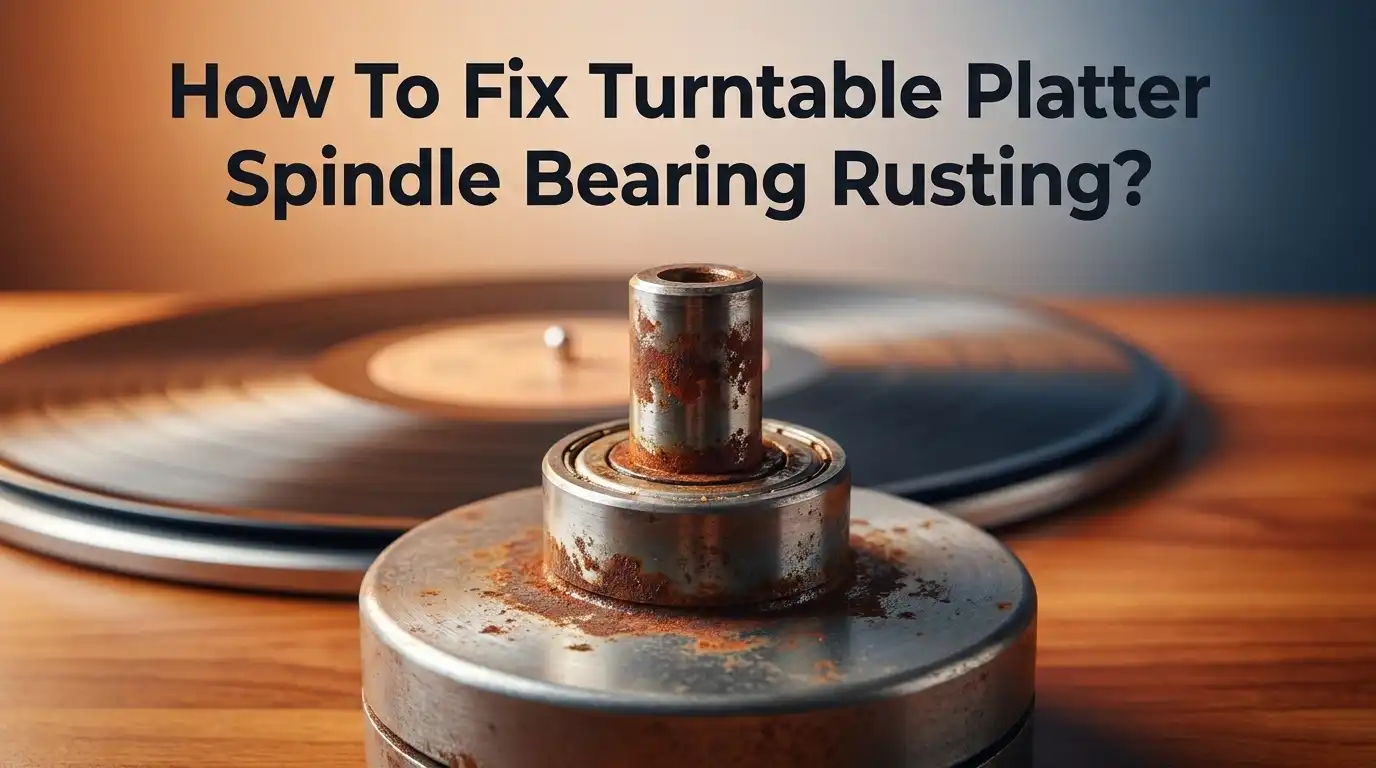
Check the platter’s physical appearance. Look directly at the spindle area where the platter sits. You’ll see orange, brown, or reddish discoloration on the metal surfaces. This rust appears as a rough, crusty coating rather than smooth metal.
The platter becomes difficult or impossible to turn by hand. You should be able to rotate it easily with minimal effort. If it feels stuck or requires significant force, corrosion has likely formed inside the bearing cup.
Smell the spindle area carefully. Rust produces a distinctive metallic or musty odor. This smell indicates moisture has reached the bearing and started the oxidation process.
Pay attention to resistance when spinning. A healthy bearing lets the platter coast smoothly for several rotations. A corroded bearing causes the platter to stop quickly, even after a firm spin.
Examine any visible oil residue. Dark, thick, or discolored oil suggests rust particles have contaminated the lubricant. Clean oil appears light and flows freely.
These signs appear gradually over time. Don’t ignore early warnings like slight grinding sounds or slower spin speeds. Catching rust early makes removal easier and prevents permanent bearing damage.
Tools and Supplies You’ll Need Before Starting
Before you start fixing your turntable spindle bearing rust, gather the right tools and supplies. Having everything ready makes the job faster and easier.
You’ll need a small brush with soft bristles. This brush removes loose rust and debris from the bearing area. A soft-bristled brush won’t scratch the metal underneath.
Get a rust removal agent. A penetrating spray works well for breaking down rust buildup. Apply it to stuck or corroded areas, then let it sit for a few minutes. This gives the spray time to dissolve the rust.
Light machine oil is essential. Sewing machine oil is ideal because it’s thin and designed for small moving parts. You only need a few drops, so a small bottle lasts a long time. Avoid heavy engine oils or thick greases, which cause problems on turntables.
A clean cloth or rag helps you wipe away rust particles and excess oil. Use lint free material so fibers don’t stick to your bearing.
You may need a small container to catch drips while you work. Newspaper or a cloth under the turntable protects your surface.
A flashlight or work light lets you see the bearing clearly. Rust and corrosion hide in dark spots, so good lighting matters.
Consider having paper towels nearby for quick cleanup. Keep them within arm’s reach while you work.
Wear gloves if you prefer. Rust particles and oils can stain your hands, though they wash off easily.
Check that your turntable is unplugged before starting any maintenance work. Safety comes first when working with electrical equipment.
Step-by-Step Guide to Removing Rust from the Bearing
Start by gathering your tools in one clean workspace. You need a soft bristled brush, a penetrating spray for rust removal, light machine oil, clean rags, and good lighting.
First, examine the bearing closely with your flashlight. Look for orange or brown discoloration that indicates rust. Gently try to rotate the platter by hand. If it moves freely, rust may be minimal. If it’s stuck or grinding, rust has built up significantly.
Apply the penetrating spray directly onto the rusty bearing. Let it sit for five to ten minutes. This gives the spray time to break down rust and loosen corrosion. Don’t rush this step. The wait makes removal much easier.
Use your soft brush to gently scrub away loosened rust particles. Work in small circular motions. Apply more spray as needed. Be patient and gentle to avoid damaging the bearing itself. Wipe away debris with a clean cloth frequently so you can see your progress.
Once rust is removed, clean the bearing thoroughly with a dry cloth. Remove all spray residue and rust particles. A clean bearing is essential before you add new oil.
Now apply only a few drops of light machine oil to the bearing. This is critical. Too much oil attracts dust and actually speeds up rust formation. A few drops create a protective barrier without overdoing it.
Rotate the platter slowly by hand several times. This distributes the oil evenly across the bearing. You should feel smooth resistance, not grinding or sticking.
Let the oil settle for a few minutes. Wipe away any excess with a clean cloth. Your bearing should now spin freely and smoothly. Check it regularly and add a drop or two of oil every few months to prevent rust from returning.
How to Properly Lubricate the Bearing After Cleaning
After you’ve cleaned away the rust, proper lubrication keeps your bearing working smoothly. This step matters because the right amount of oil prevents future rust while maintaining spin quality.
Start with a light machine oil. Sewing machine oil works best because it’s thin and designed for small moving parts. Thick engine oil will clog your bearing and attract dust. Apply only a few drops to the bearing area. Most people make the mistake of over oiling, thinking more protection means better results. A few drops are genuinely all you need.
Position your turntable so you can see the spindle clearly. Use your applicator to place oil directly onto the bearing surfaces. Rotate the platter slowly by hand several times. This spreads the oil evenly throughout the bearing and helps it settle into the right places.
Let the oil sit for a few minutes before testing. Wipe away any excess oil with a clean cloth. Your platter should spin smoothly without any resistance. If it still feels stiff, the bearing may have deeper damage that requires professional service.
Minimal lubrication improves spin smoothness and speed far better than heavy oiling does. The oil creates a protective barrier against moisture without adding weight to the bearing. This keeps your platter rotating freely and prevents rust from returning.
Check your bearing every few months. A light touch up with a drop or two of oil maintains protection without overdoing it. Consistent light maintenance beats emergency rust removal every time. Your turntable will reward you with years of smooth, reliable performance.
Tips for Long-Term Rust Prevention
Keeping your turntable spindle bearing rust free requires consistent care over time. The key is prevention rather than waiting for problems to develop.
Store your turntable in a dry location away from moisture and humidity. Basements and bathrooms expose your equipment to excess moisture that speeds up rust formation. A climate controlled room works best for long term storage.
Apply oil regularly on a schedule. Every three to six months, add just a few drops of light machine oil to the bearing. This thin layer protects the metal from oxygen and moisture. Don’t wait until you notice rust appearing.
Cover your turntable when you’re not using it. A simple cloth cover keeps dust and moisture away from the spindle area. This small step prevents many rust problems before they start.
Check the bearing visually every month. Spin the platter by hand and listen for grinding sounds. Early detection stops rust from spreading deeper into the bearing.
Avoid storing your turntable in environments with salt air or chemical fumes. These substances accelerate rust development on metal parts.
Wipe the spindle area clean regularly. Use a dry cloth to remove dust that attracts moisture. Dust particles trap water against the metal surface and promote corrosion.
Keep the bearing dry after any cleaning session. Moisture left behind will rust the bearing quickly. Let oil settle completely before using your turntable again.
Use consistent, minimal lubrication as your main defense. Heavy oiling attracts dust and creates buildup that causes other problems. A few drops applied regularly prevents rust far better than occasional heavy applications.
These simple habits protect your spindle bearing for years of reliable performance.
Common Mistakes That Damage the Bearing or Platter
Many people damage their turntable bearings by making simple mistakes during maintenance. Understanding these errors helps you protect your equipment and keep it spinning smoothly for years to come.
The most common mistake is over lubricating the bearing. People often think more oil means better protection, but this approach backfires. Excess oil attracts dust and debris that stick to the bearing surface. This buildup creates friction and actually speeds up rust formation. The bearing becomes gummy and sluggish instead of smooth and responsive.
Another frequent error involves using the wrong type of oil. Heavy engine oils, cooking oils, or thick lubricants are inappropriate for spindle bearings. These substances gum up quickly and don’t flow properly through small bearing components. They also break down faster and leave sticky residue behind.
Neglecting to clean the bearing before adding new oil causes serious problems. Applying fresh lubricant over existing rust and debris just traps moisture underneath. The rust continues spreading beneath the new oil layer where you cannot see it. Always remove old rust first with a soft brush and penetrating spray.
Storing your turntable in damp environments accelerates bearing damage significantly. Basements, bathrooms, and garages with high humidity create ideal conditions for rust development. Even brief exposure to moisture can start the corrosion process.
Finally, many people wait too long between maintenance checks. By the time they notice problems, significant rust has already developed. Regular monthly inspections catch early rust before it becomes severe. A quick visual check takes just seconds and prevents major damage.
Avoiding these mistakes keeps your bearing in excellent working condition. Simple, consistent care prevents rust and ensures reliable performance.
Troubleshooting a Stuck or Non-Spinning Platter
When your turntable platter refuses to spin, rust on the spindle bearing is usually the culprit. A stuck bearing prevents smooth rotation and can damage your equipment if you force it.
The first sign of trouble is when the platter feels tight or won’t move at all. You might also notice grinding sounds or resistance when you try to rotate it by hand. These symptoms tell you the bearing needs immediate attention.
Start by examining the spindle area closely. Look for visible rust, corrosion, or discoloration around the bearing. If rust is present, you’ll need to remove it before applying any lubricant. Use a penetrating spray and a soft brush to gently scrub away the rust buildup. Work slowly and carefully to avoid damaging the bearing itself.
Test the platter carefully after removing rust. Try rotating it gently by hand. If it still feels stuck, the rust may be deeper inside the bearing. Apply a small amount of penetrating spray again and let it sit for several minutes. This gives the liquid time to work into tight spaces.
Once the platter moves freely, wipe away excess spray with a clean cloth. The bearing should now rotate smoothly without grinding sounds.
If the platter remains completely stuck after these steps, the bearing may have severe internal corrosion. In this case, professional service becomes necessary. Attempting to force a severely stuck bearing risks breaking internal components.
Prevention matters more than repair. Regular light oiling and keeping moisture away from your turntable stops rust before it starts. A dry storage location and consistent maintenance mean you’ll rarely face stuck bearings again.
Final Thoughts
Fixing a rusty turntable spindle bearing does not need to be complicated. A few drops of light oil often solve the problem completely.
Sewing machine oil works best for this job. It reaches deep into the bearing without leaving a sticky residue behind.
Remember that less is always more with lubrication. Heavy oiling causes more harm than the rust itself ever could.
WD40 helps break down existing rust when paired with gentle brushing. This combination clears away corrosion without damaging the metal underneath.
Always test the platter after treatment. Smooth spinning means you fixed the issue successfully.
Bearing care is simple once you understand the basics. Your turntable rewards small efforts with years of reliable performance.
Skip the guesswork and stick to proven methods. Sewing machine oil and careful cleaning solve most bearing problems quickly.
Watch for warning signs before rust becomes severe. Catching problems early always makes repairs easier and faster.
A stuck platter feels alarming at first. But most cases respond well to proper cleaning and light lubrication.
Severe corrosion sometimes requires professional help. Don’t force a stuck bearing, since this can cause permanent damage.
Patience matters during any repair process. Rushing through cleaning steps often leads to incomplete rust removal.
Your turntable deserves consistent attention rather than occasional fixes. Small maintenance habits prevent bigger headaches down the road.
Trust the process outlined here for lasting results. Rust removal combined with proper lubrication keeps your platter spinning smoothly.
Every turntable owner can master this simple fix. The right oil and a little care make all the difference.
Take action now before rust spreads further. Your spindle bearing will thank you with years of smooth, quiet operation.
Frequently Asked Questions
What causes turntable spindle bearing rust in the first place?
Moisture is the main enemy of your spindle bearing. When humidity builds up around the bearing, water droplets settle on the metal surface. This moisture triggers oxidation, which creates rust. Poor storage conditions make this worse. Keeping your turntable in damp basements or bathrooms speeds up rust formation significantly.
Lack of protective lubrication also plays a role. A thin oil layer acts as a barrier against moisture. Without it, the bare metal corrodes faster.
How often should I oil my turntable spindle bearing?
You should check your bearing every few months. Only add oil when the bearing feels stiff or you notice slower platter rotation.
Less is more with spindle bearings. A few drops every few months is enough. You do not need to oil it like an engine. Over-oiling actually traps dust and debris, making rust worse.
Can I use any type of oil on my turntable bearing?
No. Heavy machine oils and automotive oils are too thick. They gum up the bearing and slow down your platter.
Sewing machine oil is the ideal choice. It flows smoothly and does not collect dirt. The thin consistency lets your platter spin freely. If you cannot find sewing machine oil, look for light machine oils designed for precision equipment.
What should I do if my platter is completely stuck?
Apply a light rust remover spray around the bearing area. Let it sit for a few minutes. Use a soft brush to gently work away the rust. Wipe away excess spray with a clean cloth.
Test the platter carefully after treatment. If it still will not budge, the bearing may have severe internal damage. At this point, professional repair becomes necessary.

Hi, I’m Pearl Standen, the voice behind The Web Utility. I’m a passionate tech enthusiast who loves exploring the latest gadgets, smart devices, and electronics that make everyday life easier. Through my website, I share honest, well-researched reviews of trending Amazon products to help you make smarter buying decisions.