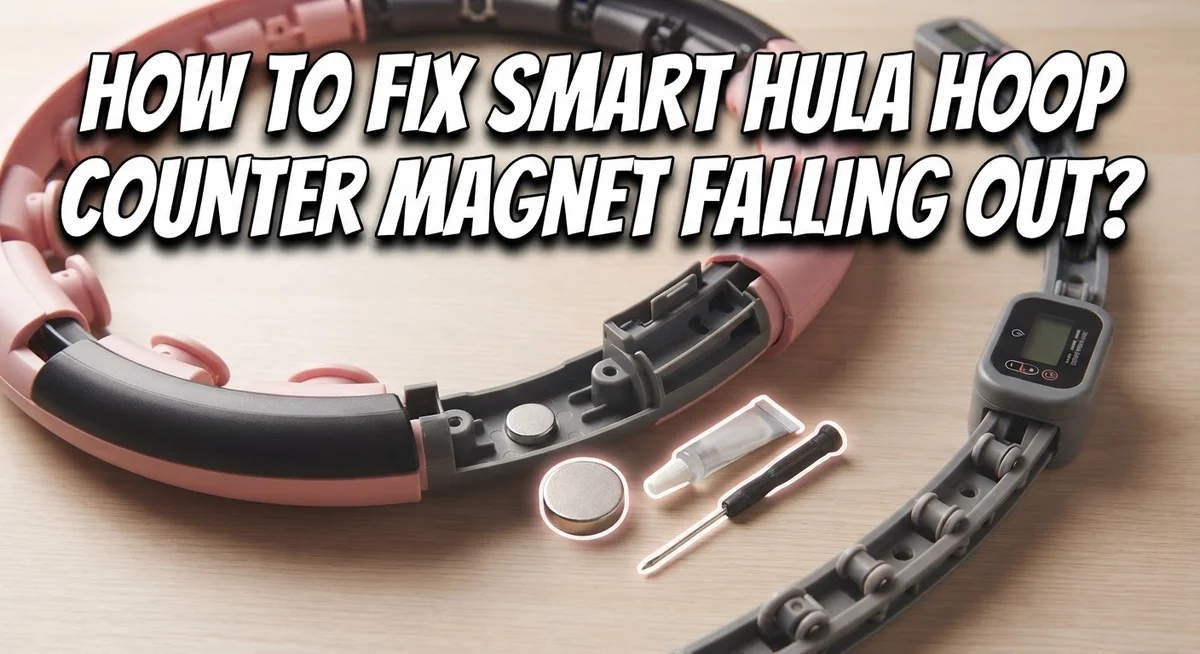
How To Fix Smart Hula Hoop Counter Magnet Falling Out?
Do you love your smart hula hoop but hate when the counter magnet falls out? You are not alone.
This is one of the most common problems hoopers face. It can stop your workout and mess up your rep count.
The good news is that this problem is usually easy to fix. Most of the time, it comes down to simple things like fit and positioning.
A hoop that is too small or too big can cause the magnet to slip loose. Wearing the hoop incorrectly can also make the counter detach during use.
In a Nutshell
- Check your hoop size first. A hoop that is too small or too big often causes the magnet to slip out during use.
- Position the hoop correctly. Keep it in a horizontal alignment on your body for the best grip and counter stability.
- Adjust the cord length. The cord attached to the counter ball needs the right length for a snug fit.
- Inspect the magnet before every session. A loose magnet connection is a top reason counters fall out mid workout.
- Disassemble the hoop if needed. You can take it apart to check the magnet and fix any loose parts inside.
- Test the fit and motion. Spin the hoop a few times before your full workout to confirm the counter stays seated properly.
Understanding How the Counter Magnet System Works
A smart hula hoop’s counter magnet system relies on magnetic attraction to track your rotations. The magnet sits inside a small ball or attachment that connects to the hoop’s interior surface. This magnetic connection allows the counter to stay in place while you exercise.
The counter ball attaches to the hoop through a cord or connector. This cord has a specific length designed to keep the magnet at the right distance from the hoop’s surface. When everything works correctly, the magnet holds firmly without shifting during movement.
The magnetic force works best when the magnet is properly seated. This means the magnet needs direct contact with the hoop’s interior at the correct angle. Any gap or misalignment reduces the holding power significantly.
Your hoop size directly affects how well the magnet stays attached. A hoop that fits your body correctly keeps the magnet in a stable position during rotation. When the hoop is too small or too large, it moves around your body. This movement creates friction that loosens the magnet’s grip.
The cord length also plays a crucial role in retention. If the cord is too long, the magnet dangles away from the hoop surface. If the cord is too short, it creates tension that can pop the magnet loose.
Proper positioning matters during wear as well. The hoop should sit horizontally around your waist or hips. Tilting or angling the hoop changes how the magnet contacts the interior surface. This misalignment causes the magnet to slip out more easily.
Understanding these mechanics helps you identify why your counter magnet falls out. Most issues stem from fit problems or improper cord adjustment rather than equipment defects.
Why the Counter Magnet Falls Out: Root Causes
The counter magnet falls out for specific reasons. Understanding these causes helps you fix the problem quickly.
Incorrect hoop size is the primary culprit. A hoop that is too small creates insufficient space around your body. This causes the hoop to slip down during movement. When the hoop shifts, the magnet loses contact with the sensor. A hoop that is too large also causes problems. It moves around too much, creating gaps where the magnet can detach.
Loose magnet installation happens when the magnet is not firmly seated in its housing. The magnet needs direct contact with the counter mechanism to stay attached. If you assembled your hoop quickly, the magnet may not have clicked into place properly. This loose connection makes the magnet vulnerable to falling out during activity.
Improper cord length is another common issue. The cord connecting the counter ball to the hoop needs to be adjusted correctly. If the cord is too long, the counter ball moves excessively. This extra movement puts stress on the magnetic connection. If the cord is too short, it creates tension that pulls the magnet away from its seat.
Incorrect positioning during wear affects retention significantly. The hoop should sit horizontally around your waist or hips. Tilting the hoop or wearing it too high or low changes the magnet’s alignment. This misalignment breaks the magnetic connection.
Wear and tear over time can also loosen the magnet. Repeated impacts during workouts may gradually weaken the connection. Regular inspection catches these issues early. Identifying which cause applies to your situation allows you to address the specific problem effectively.
Choosing the Correct Hoop Size for a Secure Fit
Your smart hula hoop’s size determines whether the counter magnet stays secure during your workout. A hoop that fits too snugly or too loosely creates problems for magnet retention.
Measure your waist and hips before selecting your hoop size. Most smart hula hoops come in small, medium, and large options. Your measurements should fall within the recommended range for your chosen size. Check the sizing chart that came with your hoop.
When the hoop is too small, it sits too high on your body and shifts constantly. This movement causes the counter magnet to bounce and eventually fall out. The magnetic connection cannot stay stable when the hoop is unstable.
When the hoop is too large, it slides down your hips and loses contact with your body. The hoop becomes loose around your midsection. This looseness directly affects how the counter magnet stays attached to the hoop material.
The correct size should feel snug but comfortable around your waist or hips. You should be able to spin it without it slipping down. The hoop should maintain steady contact with your body throughout your entire session.
Test your hoop fit before your first workout. Stand in front of a mirror and put the hoop on. Spin it gently to see if it stays in place. If it slides down or feels too tight, you likely have the wrong size.
Getting the right hoop size eliminates one of the biggest causes of magnet problems. Once your hoop fits properly, the counter magnet has a much better chance of staying secure. This single adjustment solves most retention issues people experience.
Step-by-Step: Repositioning and Securing the Magnet
Start by removing your smart hula hoop and placing it on a flat surface. This gives you a clear view of where the counter magnet attaches. Look at the connection point where the cord meets the hoop. You should see the magnet sitting in a small housing or slot.
Gently pull the counter ball away from the hoop to inspect the magnet. Check if the magnet is loose or has shifted out of its proper position. The magnet should sit flush and centered in its housing. If it has moved, carefully push it back into place until it feels snug.
Next, examine the cord length. The cord should be tight enough that the counter ball stays close to the hoop during movement. If the cord feels too long and allows the ball to hang away from the hoop, you need to adjust it. Some hoops let you shorten the cord by tying a knot or using an adjustment mechanism.
Position the hoop horizontally around your waist. It should feel snug but not uncomfortably tight. Spin the hoop slowly and watch how the counter magnet moves. The magnet should stay in contact with the hoop throughout the rotation.
Before your next workout session, give the magnet a quick tug to confirm it is secure. A properly positioned magnet should resist being pulled away from the hoop. If it comes loose easily, repeat these repositioning steps.
Test your hoop for a few minutes with gentle movements. This helps you catch any problems before your full workout begins.
Adjusting Cord Length for Proper Counter Attachment
The cord connecting your counter ball to the hoop acts as a critical anchor point. When this cord is too loose, the magnet separates from the hoop surface during movement. When it’s too tight, the counter ball can’t sit flush against the hoop, breaking the magnetic connection.
Start by removing your smart hula hoop and laying it flat. Locate where the cord attaches to the counter ball on one end and the hoop on the other end. Gently pull the cord to feel its current tension. The cord should be snug enough that the counter ball sits directly against the hoop without gaps.
Adjust the cord by loosening or tightening it at the attachment points. Most smart hula hoops use simple knots or sliding adjusters for this purpose. Move slowly and make small changes. Test after each adjustment to avoid over tightening, which can damage the cord or magnet housing.
Once adjusted, put on your hoop and position it horizontally around your waist. The counter ball should rest against your body through the hoop material. Move gently at first to see if the magnet stays in place. Perform slow circular motions and gradually increase your speed.
If the counter still falls out after cord adjustment, the issue may lie elsewhere. Check that the magnet itself is fully seated in its housing. Verify your hoop size matches your measurements. Poor fit or loose magnet installation can override even perfect cord length.
Proper cord adjustment takes just a few minutes and solves many retention problems. Make this your first troubleshooting step before investigating other causes.
Disassembling the Hoop for Inspection and Maintenance
Taking your smart hula hoop apart helps you spot problems with the counter magnet. This process is simple and takes just a few minutes.
First, remove your hoop and place it on a clean, flat surface. You need good lighting so you can see all the parts clearly. Wash your hands before you start to keep dust away from the magnet.
Locate the counter ball attachment point on the hoop. Gently pull the counter ball away from the hoop to see how the magnet connects. Look for any visible cracks, corrosion, or debris around the magnet housing.
Inspect the magnet itself for signs of damage. Check if the magnet sits flush in its holder or if it sticks out unevenly. A magnet that is not level will fall out more easily during movement.
Examine the cord that connects the counter to the hoop. Pull it gently to see if it moves too much or feels loose. The cord should have minimal wiggle room when the magnet is in place.
Look at the attachment points where the cord connects to both the hoop and counter ball. These areas wear down over time. Check for frayed cord edges or bent attachment clips.
Wipe down all parts with a dry cloth. Remove any dust, sweat, or dirt that collected inside the housing. Clean parts fit together more securely than dirty ones.
Test the magnet connection by pressing it back into place. It should click or snap into position with light pressure. If it falls out immediately, the housing may be damaged.
Take photos of the assembly before you reassemble everything. These images help you remember how parts fit together correctly.
Common Mistakes That Lead to Magnet Detachment
People make several mistakes that cause magnets to fall out during workouts. Understanding these errors helps you avoid them and keep your counter secure.
Using the wrong hoop size tops the list of common problems. A hoop that’s too small won’t stay in place on your body. It slides down your hips and loses contact with the magnet sensor. The counter then falls away from the hoop during movement. Always measure your waist and hips before starting. Your hoop should feel snug but still comfortable.
Poor horizontal positioning creates another major issue. Many people wear their hoop at an angle instead of flat around their waist. This tilted position puts uneven pressure on the counter ball. The magnet can’t stay attached when the hoop sits crooked. Keep your hoop level and parallel to the ground while wearing it.
Inadequate cord length adjustment leads to magnet detachment too. The cord connecting your counter to the hoop must be just right. Too much slack allows the counter to swing away from the hoop. Too little tension strains the magnet connection. Test the cord length before each session.
Loose magnet installation happens when people don’t seat the magnet firmly into place. A magnet that isn’t fully connected will pop out easily during exercise. Always press the magnet down until you hear or feel it click.
Skipping pre workout checks is also common. People grab their hoop and start exercising without verifying the magnet is secure. A quick tug test takes seconds but prevents loss.
These mistakes are easy to fix once you know what to look for.
Troubleshooting Persistent Counter Issues
When your smart hula hoop counter magnet keeps falling out, you need to identify the root cause first. The most common reason is that your hoop size doesn’t match your body properly. A hoop that’s too small will slip down and cause the counter to detach during movement.
Start by checking your hoop diameter. Measure from your wrist to your elbow with your arm bent. This measurement should roughly match your hoop size. If your hoop is undersized, it won’t stay in place no matter how tight you wear it.
Next, examine how you position the hoop on your body. Keep the hoop perfectly horizontal around your waist. Tilting or angling it creates uneven pressure that loosens the counter attachment. The hoop should sit snugly at your natural waist level, not higher or lower.
Before each workout, physically tug on the counter ball to verify the magnet is seated firmly. Push it into the attachment point until you hear or feel a click. This simple check takes seconds but prevents mid workout loss.
Check the cord connecting your counter to the hoop. The cord length must be appropriate for your body size. Too much slack allows the counter to bounce away from the hoop during movement. Too little tension strains the attachment point.
If you’ve verified your hoop size is correct, positioned it horizontally, secured the magnet, and adjusted the cord properly, your counter should stay in place. Most magnet detachment issues resolve once you address these four factors.
Final Thoughts
A falling counter magnet feels frustrating, but the fix is simple. Most problems trace back to fit, positioning, or a loose magnet. Once you address these three areas, your workouts should run smoothly.
Start with the basics every time. Check your hoop size before you begin. Position it horizontally on your body. Give the magnet a quick tug to confirm it sits firmly in place.
These small checks take less than a minute. Yet they save you from constant interruptions during your workout. A little routine goes a long way here.
If problems continue, take the hoop apart. Inspection helps you spot hidden damage or wear. Sometimes the cord stretches or the attachment point loosens over time.
Regular maintenance keeps your equipment reliable. Wipe down the parts. Check the connections. Reassemble carefully and test the magnet again before your next session.
Remember that consistency matters more than perfection. You do not need to be an expert to fix this issue. You just need to follow the same steps each time you use your hoop.
Most users find that proper sizing solves the majority of counter problems. Positioning comes next on the list of fixes. Magnet seating and cord length round out the essential checks.
Think of this as a simple pre workout habit. Just like stretching before exercise, checking your hoop takes only moments. It protects your counter and your workout flow.
With these steps, you can enjoy uninterrupted sessions. Your smart hula hoop will track your progress accurately. And you will spend less time troubleshooting and more time reaching your fitness goals.
Frequently Asked Questions
What causes the counter magnet to fall out during workouts?
The counter magnet falls out for a few main reasons. Your hoop might be too large or too small for your body size. When the fit is wrong, the hoop slips around your waist, and the magnet loses contact with the sensor.
Loose magnet installation is another culprit. If the magnet isn’t pressed firmly into its slot before you start, it can shake free during movement. Poor horizontal positioning also matters. Keep the hoop level and snug against your body at all times.
How do I know if my hoop size is correct?
The right hoop size sits snugly on your waist without sliding up or down. When you wear it, the hoop should stay in one spot even when you move. A hoop that’s too small feels tight and uncomfortable. A hoop that’s too large rotates and shifts constantly.
Test the fit by standing still and gently moving side to side. The hoop should move with your body, not slip independently. If it rotates freely around your waist, it’s too big for you.
How tight should the cord be on the counter ball?
The cord should be snug but not overly tight. You want the counter ball to stay in place without moving around. Press the magnet into its housing until you feel it click or seat firmly.
Tug gently on the counter ball before each session. It should not move or wiggle. If it does, adjust the cord length slightly until the ball feels secure and stable.
Should I take my hoop apart for maintenance?
Yes, disassembly helps you inspect the magnet and connection points. Take the hoop apart if the counter keeps falling out after you’ve checked sizing and positioning. This lets you see if the magnet has dirt or debris blocking proper contact.
Wipe all parts with a dry cloth. Check that the magnet slides smoothly into its slot. Reassemble carefully and test the fit before your next workout.

Hi, I’m Pearl Standen, the voice behind The Web Utility. I’m a passionate tech enthusiast who loves exploring the latest gadgets, smart devices, and electronics that make everyday life easier. Through my website, I share honest, well-researched reviews of trending Amazon products to help you make smarter buying decisions.