
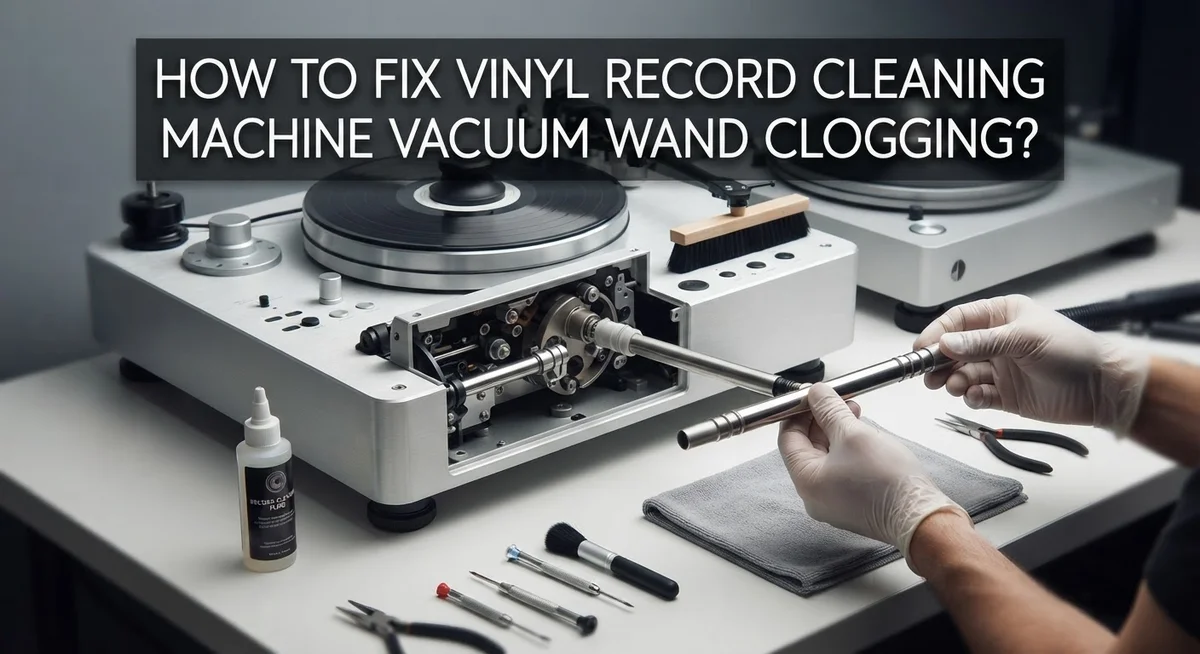
How To Fix Vinyl Record Cleaning Machine Vacuum Wand Clogging?
Does your vacuum wand sputter and struggle instead of pulling moisture off your records? You are not alone. This is one of the most common issues faced by vinyl lovers who own a record cleaning machine.
A clogged vacuum wand can leave records damp. This leads to streaks, residue, and even mold growth over time. It also puts extra strain on your machine’s motor.
The good news is that this problem is fixable. In most cases, you do not need a new machine at all. You just need to understand why the clog happens in the first place.
In a Nutshell
- Rotate the pickup tube often. This simple step keeps suction strong and stops moisture from building up in one spot.
- Swap Teflon strips for velvet. Velvet grips records better and pulls up more liquid than Teflon strips do.
- Run two rinse cycles with distilled water. This clears out leftover cleaning solution and stops residue from clogging the wand.
- Use only a few drops of cleaning solution. Too much liquid overwhelms the wand and causes it to struggle.
- Check your wand parts often. Regular inspection catches small issues before they turn into bigger clogs.
- Try hand cleaning as a backup. If your machine acts up, manual methods can still get your records clean.
Understanding Why Vacuum Wands Clog
A clogged vacuum wand happens for specific reasons. Understanding these causes helps you prevent future problems and keep your records clean.
Excess cleaning solution is the main culprit. When you apply too much liquid to your records, the wand cannot pull it all away. The moisture builds up inside the tube and blocks airflow. This reduces suction power significantly.
Residue accumulation also causes clogs. Cleaning solutions leave behind film and particles on record surfaces. If you skip rinse cycles, this residue gets drawn into the wand. Over time, layers of dried material narrow the tube opening.
Worn wand components contribute to clogging too. Teflon strips on older machines wear down and become slippery. When the material loses grip, it pulls less moisture from records. Excess liquid then enters the tube instead of staying on the record surface.
Poor wand positioning matters more than you think. If the pickup tube sits at the wrong angle, it cannot extract moisture efficiently. Liquid pools in certain spots and eventually blocks the passage.
Dirty wand interiors trap debris easily. Dust and particles from records accumulate inside the tube. These materials mix with moisture and form blockages.
Inadequate maintenance allows small problems to grow. Regular inspection catches issues early. A quick check of your wand components prevents major clogs later.
Understanding these causes puts you in control. You can now take action before clogs develop. The next steps focus on practical solutions that keep your wand clear and your records dry.
Signs Your Vacuum Wand Needs Attention
Your vacuum wand shows clear warning signs when it needs attention. Recognizing these signals early helps you avoid bigger problems down the road.
Weak suction power is the most obvious sign. If your wand pulls less moisture from records than it used to, something is blocking the airflow. You will notice records stay damp after a cleaning cycle instead of drying quickly.
Sputtering sounds during operation mean trouble. A healthy wand runs quietly and smoothly. Strange noises indicate air is escaping around a clog instead of flowing through properly.
Visible moisture pooling on your records after cleaning is another red flag. The wand should remove nearly all water from the surface. If liquid sits on the record, your wand is not working as it should.
Slow drainage from the collection bottle tells you something is wrong. Water should flow out steadily. Sluggish drainage means the internal pathway has buildup.
Unpleasant odors coming from the wand suggest residue is trapped inside. Stale smells develop when moisture and cleaning solution mix and sit in the tube for too long.
Visible debris inside the wand opening is easy to spot. You might see dust, lint, or dried cleaning solution stuck to the walls.
Pay attention to these warning signs. Your wand communicates problems through performance changes. Regular checks before each cleaning session catch issues early. A few minutes of inspection now saves you from dealing with a completely blocked wand later. Trust what you observe, and act quickly when something feels off.
Step-by-Step Guide to Clearing a Clogged Wand
Start by unplugging your machine from the wall outlet. Safety comes first when working with any electrical device.
Next, locate the pickup tube inside your wand assembly. This tube pulls moisture from your records. Gently rotate it clockwise and counterclockwise several times. This movement helps dislodge any debris stuck inside the passage.
Remove the collection bottle from the bottom of your machine. Empty any liquid or sediment that has accumulated. Rinse the bottle thoroughly with distilled water and let it dry completely before reattaching.
Inspect the wand opening carefully. Use a flashlight to look inside the tube. If you see visible debris, use a soft brush or pipe cleaner to gently remove it. Push the brush through slowly without forcing it.
Check the velvet or Teflon strips lining your wand. These materials can become compressed or matted down over time. If they look flattened, they need replacement. Gently clean these strips with distilled water and allow them to air dry.
Run a test cycle with only distilled water and no records. This flushes out any remaining particles in the system. Let the water flow through the wand into an empty collection bottle. Listen for normal suction sounds and watch for steady water drainage.
Repeat this rinse cycle a second time to ensure complete clearing. Your wand should feel lighter and suction should sound stronger.
Plug the machine back in and test it on a practice record. You should notice improved moisture removal immediately. The record surface should be nearly dry after the cleaning cycle completes.
Upgrading Wand Components for Better Performance
Upgrading your wand components makes a real difference in how your machine performs. When you replace worn parts, you stop clogs before they start.
Velvet material works better than older Teflon strips for moisture pickup. The velvet grabs water more effectively and resists clogging. Many cleaning machines use this upgrade because it actually works. Switching to velvet strips takes just a few minutes and requires no special tools.
The pickup tube itself can wear down over time. A rotated or repositioned tube optimizes the vacuum flow through your wand. This simple adjustment improves how much moisture gets removed from your records. Better positioning means less water stays behind on the surface.
Check the collection bottle connection regularly. A loose or dirty connection reduces suction power and causes backup. Make sure the seal between the wand and bottle is tight and clean. A secure connection prevents air leaks that weaken your vacuum.
Consider upgrading the wand head if yours shows cracks or damage. Even small cracks let air escape and reduce suction. A new wand head maintains proper vacuum pressure throughout your cleaning cycles.
Run distilled water rinse cycles after you upgrade any components. This clears out dust and debris from the new parts. Two cycles with just distilled water prepares your machine for regular use.
Regular component inspection catches problems early. Check your wand parts every few months for wear. Small upgrades prevent expensive repairs later. Better components mean your machine stays efficient and your records stay clean longer.
Best Practices for Applying Cleaning Fluid and Rinsing
Applying cleaning fluid correctly prevents many vacuum wand clogs before they start. Use only a few drops of quality cleaning solution on your record. Too much fluid creates excess moisture that backs up into your wand and causes blockages.
Apply the solution evenly across the record surface. Let it sit for just a few seconds before running your vacuum cycle. This timing allows the fluid to loosen dirt without oversaturating the vinyl.
Start your vacuum immediately after applying the cleaning fluid. The wand should remove nearly all moisture from the record surface in one pass. If moisture remains visible after the first cycle, something may already be clogging your system.
Rinsing is where most people make critical mistakes. Run your machine with distilled water only and no cleaning fluid. This first rinse removes leftover cleaning solution from the record grooves.
Complete a second rinse cycle with distilled water to ensure complete clearing. This extra step prevents residue buildup that leads to future clogs. Many users skip this second cycle and wonder why their wands clog repeatedly.
Never use tap water for rinsing. Minerals in regular water leave deposits inside your wand passages. Distilled water keeps everything clean and clear.
Allow your record to dry completely before storing it. Place cleaned records on a soft, clean surface while they air dry. This prevents dust from settling on wet grooves.
Check your wand after each cleaning session. Look inside the pickup area for any trapped debris or moisture. Quick inspections catch small problems before they become major clogs that reduce your machine’s cleaning power.
Routine Maintenance to Prevent Future Clogging
Keeping your vacuum wand in top shape prevents clogs from happening in the first place. The best strategy is simple: inspect your wand regularly after each cleaning session. Look inside the opening for any debris or moisture buildup. This takes just a few seconds but catches problems early.
Rotate your pickup tube periodically to ensure even wear and consistent vacuum performance. Different angles of the tube contact the record surface, so rotating it distributes the workload. This small step extends the life of your wand components significantly.
Use only a few drops of quality cleaning solution during each session. Over-applying fluid is the main reason clogs develop. More solution does not mean cleaner records. It means excess moisture gets trapped in your wand and collection bottle.
Run two distilled water rinse cycles after every cleaning with solution. These cycles flush out any remaining residue before it hardens inside the wand. Distilled water is essential because tap water leaves mineral deposits that contribute to future clogs.
Empty your collection bottle regularly, even if it does not look completely full. Moisture accumulates inside the bottle and can back up into your wand. A partially full bottle creates the perfect environment for clogs to form.
Check the velvet or Teflon strips lining your wand for wear and tear. These materials deteriorate over time and lose their moisture-pickup ability. When they start to look compressed or damaged, they need replacement.
Store your machine in a dry location. Humidity in your storage area can cause moisture to linger inside components. A cool, dry space keeps everything functioning properly between cleaning sessions.
Common Mistakes That Lead to Recurring Clogs
Many people create clogs without realizing it. Understanding these mistakes helps you avoid them entirely.
Over applying cleaning solution is the biggest culprit. You only need a few drops per record. Extra solution creates excess moisture that the wand cannot remove quickly enough. This moisture builds up inside the tube and hardens, blocking the vacuum path. Think of it like trying to drink a milkshake through a thin straw. Too much liquid overwhelms the system.
Skipping rinse cycles causes another major problem. After you clean with solution, you must run at least two full cycles with distilled water only. Many people skip this step or do just one rinse. Leftover cleaning fluid residue stays on the record and in your wand. This residue dries and becomes sticky, trapping moisture and causing blockages later.
Using tap water instead of distilled water introduces minerals and impurities. These deposits accumulate inside your wand over time. The buildup narrows the vacuum pathway gradually until clogs form.
Neglecting component inspection leads to preventable problems too. Worn Teflon strips or damaged pickup tubes reduce suction power. Weaker suction means moisture sits longer on records and in the wand. You should check your wand components after every few cleaning sessions.
Ignoring a partially full collection bottle also matters. Even if the bottle looks half empty, it reduces vacuum strength. A weaker vacuum cannot pull moisture efficiently, leading to clogs.
Finally, rushing through the cleaning process causes mistakes. Vacuum immediately after applying solution. Allow proper drying time before storing records. These simple habits prevent most recurring clog issues from ever developing.
Troubleshooting Persistent Suction Issues
When your vacuum wand loses suction power, the problem usually stems from moisture buildup inside the tube itself. This happens because cleaning fluid mixes with water during the rinse process, creating a thick paste that blocks airflow.
Start by checking the pickup tube’s position. Rotate it slightly to see if you’ve been using the same angle repeatedly. Uneven wear on one side can reduce suction effectiveness. A simple rotation often restores better vacuum performance immediately.
Next, inspect the internal pathways for moisture accumulation. Use a flashlight to look inside the collection bottle connection area. You may see residual dampness clinging to the walls. This moisture hardens over time and restricts airflow significantly.
Clear the blockage by running distilled water cycles without records. Run your machine empty with just distilled water for two full cycles. This flushes out accumulated moisture and dried cleaning solution particles. Never use tap water, as minerals create additional buildup.
If suction remains weak after flushing, examine the wand head material. Teflon strips can become compressed or damaged, reducing effectiveness. Velvet material provides better performance in many cases. Worn strips don’t seal properly against the record surface, causing air leaks instead of strong suction.
Check that your collection bottle isn’t overfilled. Even partial fullness reduces vacuum strength because less air space means less suction power. Empty it completely before each cleaning session.
Finally, inspect all connection points for cracks or loose seals. Air leaks anywhere in the system destroy suction, even if the wand itself works perfectly. Tighten connections and replace any damaged tubing you discover.
These practical steps address most suction problems without expensive repairs or replacements.
Final Thoughts
A clogged vacuum wand feels like a big problem. But it rarely is.
Most clogs come from small habits. Too much cleaning solution. Skipped rinse cycles. Worn wand strips left unchecked.
Fix these small habits and your wand stays clear. Your machine works the way it should.
Think of maintenance as part of the cleaning ritual itself. Rotate your pickup tube. Run your rinse cycles. Check your strips.
These steps take a few extra minutes. They save you hours of frustration later.
Your records deserve clean, dry surfaces after every wash. A clogged wand leaves moisture behind. That moisture attracts dust and grime over time.
Clear suction means better results every single time you clean.
Remember that vacuum machines are not the only path forward. Hand cleaning methods work well too. Ultrasonic cleaners offer another option for collectors.
Choose the method that fits your collection size and budget. All approaches share one goal: clean, quiet playback.
If you already own a vacuum machine, treat it well. Simple upkeep keeps it running for years.
Distilled water remains your best friend here. It rinses without leaving mineral residue behind.
Quality cleaning solution matters too. A few drops go a long way. More solution does not mean better cleaning.
Pay attention to how your wand sounds and feels during use. Changes in suction often signal a problem before it becomes serious.
Catching issues early saves your records and your machine.
Vinyl cleaning does not need to feel complicated. Stick to basic habits. Check your equipment often.
Your collection will sound better for it. Clean records simply play better, session after session.
Frequently Asked Questions
Why does my vacuum wand keep clogging even after I clean it?
Clogs often return because the root cause wasn’t addressed. The most common reason is excess moisture trapped inside the tube. When you use too much cleaning solution, extra liquid gets sucked up and sits in the wand pathways. This moisture hardens and blocks the airflow.
Another reason clogs return is incomplete rinsing. If you skip the distilled water cycles, residue from cleaning fluid builds up over time. Each cleaning session adds more buildup until suction fails completely.
Check your collection bottle too. An overfilled bottle reduces vacuum power and forces moisture back into the wand. Empty it before each cleaning session to prevent this problem.
How many distilled water rinse cycles should I run?
Most experts recommend running 2 cycles with distilled water after you finish cleaning with solution. The first cycle removes most cleaning fluid from the record. The second cycle ensures no residue remains on the surface.
Some people run a third cycle if they used extra cleaning solution. This extra step prevents future clogs and keeps your records completely dry.
Can I clean records without a vacuum machine?
Yes, absolutely. Hand cleaning and ultrasonic methods work well for vinyl records. Hand cleaning uses soft brushes and distilled water applied carefully to the record surface. Ultrasonic machines use sound waves to lift dirt from grooves without vacuum suction.
These alternatives avoid wand clogging entirely. Choose the method that fits your collection size and your budget best.
What material upgrades prevent wand clogs?
Replacing worn Teflon strips with velvet material improves moisture removal significantly. Velvet material grabs moisture more effectively than slick Teflon surfaces. This upgrade reduces the amount of water that gets sucked into the tube.
Check your wand head regularly. Worn materials let moisture slip through, which causes clogs downstream in the system.

Hi, I’m Pearl Standen, the voice behind The Web Utility. I’m a passionate tech enthusiast who loves exploring the latest gadgets, smart devices, and electronics that make everyday life easier. Through my website, I share honest, well-researched reviews of trending Amazon products to help you make smarter buying decisions.