
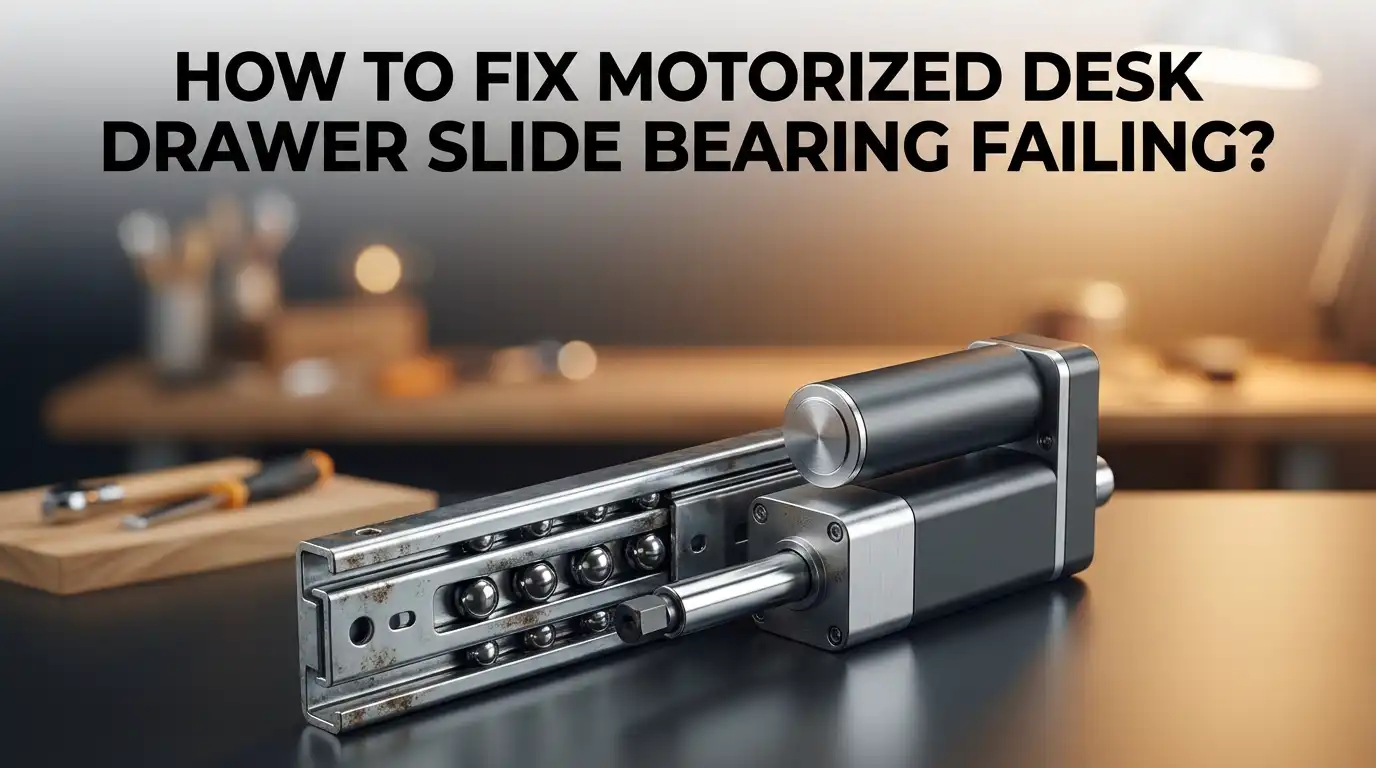
How To Fix Motorized Desk Drawer Slide Bearing Failing?
Does your motorized desk drawer stick or refuse to close smoothly? A failing slide bearing is often the cause. This small part plays a huge role in how your drawer moves.
Ball bearing slides can wear out over time. Dirt, misalignment, or lack of lubrication often leads to this problem. The good news is that you can fix it yourself.
You do not need to be a repair expert. With a few basic tools, you can get your drawer working again. A screwdriver, a clean cloth, and some silicone spray are usually all you need.
In a Nutshell
- Remove the drawer completely from the cabinet first. This gives you full access to inspect both the cabinet slides and drawer tracks closely.
- Clean the tracks with a soft cloth. Dirt and debris often cause the bearing to stick or jam.
- Apply silicone spray to lubricate the ball bearing tracks. This step alone often solves most sticking problems.
- Check for bent metal pieces on the slides. Straighten any bent parts before you put the drawer back.
- Confirm the drawer size matches the opening. Your drawer box should be 1-1/16 inches less than the opening width.
- Verify the tracks are parallel. Misaligned tracks are a leading cause of jamming and slow movement.
- Set a maintenance routine. Clean and lubricate your slides every 3 to 6 months to keep them running smoothly.
Understanding Ball Bearing Drawer Slides and Why They Fail
Ball bearing drawer slides use small metal balls held in a cage or track system. These balls roll smoothly to help your drawer glide open and closed. The bearings sit inside metal channels on both the cabinet and the drawer itself.
Why do these bearings fail? Several common reasons cause problems. First, dust and debris collect inside the tracks over time. Small particles scratch the metal surfaces and jam the balls. Second, the lubricant dries out or washes away. Without proper lubrication, friction increases and the bearings wear faster. Third, misalignment happens when tracks bend or shift. If the cabinet track and drawer track are not parallel, the balls cannot roll freely.
Overloading your drawer is another major culprit. Heavy items put stress on the bearings beyond their design limits. The metal components bend slightly, creating drag and resistance. Poor installation also causes problems. If the drawer is too wide for the opening or the tracks are not installed straight, the bearings will struggle immediately.
What happens when bearings fail? You notice grinding sounds, sticky movement, or complete jamming. The drawer may hang up on one side or refuse to close all the way. In motorized systems, the motor works harder to push or pull the drawer, which can damage the electrical components too.
Understanding these failure points helps you prevent future problems. Regular inspection catches issues early. Keeping tracks clean and lubricated prevents most bearing failures. Checking alignment ensures smooth operation for years. A little preventive care stops small problems from becoming expensive repairs.
Tools and Materials You’ll Need Before Starting
Before you start fixing your motorized desk drawer slide bearing, gather the right tools and materials. Having everything ready makes the repair faster and easier.
Basic hand tools are your foundation. You’ll need a Phillips head screwdriver and a flathead screwdriver for removing fasteners and prying gently if needed. A rubber mallet helps straighten bent metal without causing damage. Keep a small adjustable wrench nearby for any bolts that need loosening.
Cleaning supplies are essential for removing debris from the tracks. Grab a soft cloth or old cotton rags. Paper towels work too, but cloth is better for detailed cleaning. You may also want a small brush with soft bristles to reach into tight spaces where dust collects.
Lubrication products restore smooth movement to your slides. Silicone spray lubricant is the best choice for ball bearing drawer slides. It penetrates tight spaces and doesn’t attract dust like oil based products do. Keep the spray can nearby during your entire repair process.
Measurement tools ensure proper alignment. Bring a tape measure to check drawer dimensions and opening width. A level or straight edge helps verify that tracks are parallel and not twisted.
Safety items protect you during repairs. Wear safety glasses when spraying lubricant. Work gloves keep your hands clean and protected from sharp metal edges on the slides.
Optional but helpful items include a headlamp or flashlight for seeing inside the cabinet clearly. A small container holds screws and fasteners so nothing gets lost.
Organize all these items on your workspace before starting. This setup prevents frustration and keeps your repair moving smoothly.
Step-by-Step: Removing the Drawer and Inspecting the Slides
Start by unplugging your motorized desk drawer system or turning off the power switch. Safety comes first when working with powered furniture.
Open the drawer fully and locate the release levers or clips on both sides of the slide mechanism. These levers hold the drawer in place. Press them simultaneously to disengage the drawer from the cabinet slides. Pull the drawer straight out toward you with steady pressure. Avoid tilting or angling it, as this can damage the ball bearing tracks.
Once removed, place the drawer on a clean, flat surface where you have good lighting. Examine the metal slide tracks on both the cabinet and the drawer itself. Look for visible damage like dents, bent edges, or discoloration that indicates rust or corrosion.
Run your fingers along the ball bearing channels carefully. Feel for rough spots, grinding texture, or debris buildup. These signs point to wear or contamination inside the tracks. Check if the channels appear straight or if any sections seem warped or misaligned.
Inspect the drawer box dimensions by measuring its width. Compare this measurement to your cabinet opening width. The drawer should be approximately 1 and 1/16 inches narrower than the opening for proper fit and smooth operation.
Look at the slide tracks on the cabinet sides too. Verify they run parallel to each other. Use a straightedge or level to check alignment. Misaligned tracks cause binding and accelerate bearing failure.
Document any bent metal components, rust spots, or debris you discover. Take photos if helpful. This inspection reveals whether you need simple cleaning and lubrication or if replacement parts are necessary. Understanding the exact problem guides your repair approach.
Cleaning and Lubricating the Bearing Tracks
Cleaning and lubricating the bearing tracks is essential for restoring smooth drawer movement. This process removes debris that blocks the ball bearings and applies fresh lubricant to reduce friction.
Start by using a dry cloth to wipe away loose dust and dirt from the slide tracks. Work along the entire length of both the cabinet slides and the drawer tracks. Pay special attention to corners and crevices where debris accumulates. A soft brush helps dislodge stubborn particles stuck in the bearing channels.
Next, use a slightly damp cloth to clean the tracks more thoroughly. Wipe in one direction along the length of each track. This removes fine dust and old lubricant residue that prevents smooth operation. Allow the tracks to dry completely before moving to the lubrication step.
Apply lubricant evenly across all bearing surfaces. Spray a small amount into the track channels on both sides. Work the drawer in and out slowly several times to distribute the lubricant throughout the bearing system. This helps the product reach all ball bearing contact points.
Wipe away any excess lubricant with a clean cloth. Too much lubricant attracts dust and can cause sticky movement. The tracks should feel slightly slick but not wet or greasy.
Test the drawer movement after lubrication. It should glide smoothly without grinding sounds or resistance. If problems persist, the tracks may be misaligned or bent metal components need straightening.
Regular cleaning every three to six months prevents future bearing failures. This simple maintenance routine keeps your motorized drawer functioning properly and extends the lifespan of the slide mechanism significantly.
Aligning, Straightening, and Reassembling the Slide System
Once you’ve cleaned and lubricated your slide tracks, you’re ready to straighten any bent components and reassemble the system. This step is critical because misaligned metal pieces cause the drawer to jam or bind during operation.
Inspect the metal slide channels carefully for any visible bends or warping. Place the slide on a flat surface and look for gaps between the metal and the surface. Small bends can often be straightened using a rubber mallet and a wooden block. Position the block against the bent area and tap gently until the metal aligns with your reference surface.
Check that both cabinet slides are perfectly parallel to each other. Use a straight edge or level to verify they run in the same direction. Misaligned tracks cause uneven pressure on the ball bearings and create friction. Loosen the mounting bolts slightly and adjust each slide until they’re parallel, then retighten securely.
Before reassembling, measure your drawer width again. Your drawer should be approximately 1 and 1/16 inches narrower than the opening width. This clearance prevents binding as the drawer slides in and out.
Slide the drawer back into the cabinet slowly and smoothly. The movement should feel even and controlled. If you notice resistance at any point, stop and check the track alignment. Listen for grinding sounds, which indicate remaining misalignment issues.
Test the drawer multiple times through its full range of motion. Open and close it completely at least five times. The drawer should glide smoothly without wobbling or catching. If problems persist, repeat the alignment process until movement is consistent and smooth.
Checking Drawer Fit, Track Parallelism, and Proper Dimensions
Proper fit and alignment are critical for motorized drawer slides to work smoothly. A drawer that doesn’t fit correctly will bind, strain the motor, and damage the bearings faster. Let’s examine what measurements and checks matter most.
Your drawer box should be approximately 1 inch and 1/16 inch narrower than the opening width. This clearance prevents the drawer from rubbing against the cabinet sides during operation. Measure your drawer at three points: top, middle, and bottom. If measurements vary by more than 1/8 inch, the drawer box itself may be warped.
Track parallelism is equally important. Both the left and right slide tracks must run perfectly parallel to each other. If one track tilts inward or outward, the drawer will pull to one side and the bearings will wear unevenly. Use a level or straightedge to check this alignment.
Inspect the cabinet opening for square corners and straight sides. Place your straightedge against the opening’s top, bottom, and sides. Any gaps indicate the cabinet frame has shifted or settled unevenly. This affects how the slides sit and function.
Check that both slide channels are at the same height. If one is higher than the other, the drawer will tilt and create uneven pressure on the bearings. Measure from the floor to each track’s center point.
Look for bent metal components on both the drawer slides and cabinet tracks. Even small bends disrupt smooth movement. Gently straighten minor bends with a rubber mallet, tapping carefully against a wooden block to avoid further damage.
These checks take just minutes but prevent serious bearing failures down the road.
Common Mistakes That Cause Repeat Bearing Failures
Bearing failures often repeat because people skip critical prevention steps. Overloading your drawer is one of the biggest culprits. When you pack too much weight into the drawer, the ball bearings experience constant stress that wears them out faster.
Another common mistake is ignoring bent metal components. After the first failure, many people reassemble everything without straightening warped slide channels. These bent pieces create uneven pressure on the bearings, causing the same problem to happen again within weeks.
Skipping regular maintenance is equally damaging. Your bearings need cleaning and lubrication every three to six months. Without this routine care, dust and debris accumulate inside the tracks and grind against the balls, accelerating wear.
Many people also fail to verify that their drawer box dimensions are correct. Your drawer should be approximately one inch and one sixteenth inch narrower than the opening width. If your drawer is too wide, it forces the bearings to work at an angle, creating premature failure.
Misaligned tracks cause repeat problems too. After repairs, people don’t check whether both cabinet slides are perfectly parallel to each other. Even a slight angle puts uneven stress on the bearing system.
Improper lubrication is another repeat failure cause. Using the wrong lubricant or applying too much creates sticky buildup that damages ball movement. You need the right type of lubricant applied in the correct amount.
Finally, rushing the reassembly process leads to trouble. Take time to slide your drawer back slowly and test it through its full range multiple times. This simple step catches alignment issues before they cause bearing damage again.
Troubleshooting Persistent Jamming and Motorized Slide Issues
When your motorized desk drawer slide keeps jamming, the problem usually stems from a few specific causes. Debris buildup is one of the most common culprits. Dust, paper fibers, and small particles accumulate in the ball bearing tracks over time, creating friction that stops smooth movement.
Misalignment happens when the drawer or cabinet slides shift slightly out of position. Even a small deviation can cause the bearing rollers to bind. You’ll notice the drawer pulls to one side or feels sticky at certain points during its travel.
Lack of lubrication accelerates bearing wear significantly. Without proper lubrication, metal parts grind against each other, generating heat and resistance. The motorized mechanism works harder and eventually fails.
Overloading your drawer is another major issue. When you pack drawers beyond their weight capacity, the bearings experience excessive pressure. This forces the motor to work overtime and damages the rolling components.
Start troubleshooting by removing the drawer completely from the cabinet. Open it fully and look inside the slide tracks on both sides. You should see the ball bearings clearly. Wipe out any visible dust or debris using a dry cloth.
Next, check if the tracks are parallel by measuring the distance between them at three different points. The measurements should match exactly. If they don’t, something is bent or misaligned.
Finally, examine the drawer box itself. Measure its width and compare it to the cabinet opening. Your drawer should be about 1 inch and 1/16 inch narrower than the opening width.
These checks help you identify whether the jamming comes from contamination, misalignment, or dimensional problems.
Final Thoughts
Fixing a motorized desk drawer slide bearing does not need to feel impossible. Most problems come from simple causes like dirt, misalignment, or dry bearings.
You can solve these issues with basic tools and a little patience. A screwdriver, clean cloth, and silicone spray handle most repairs.
Regular maintenance makes the biggest difference in the long run. Clean and lubricate your slides every three to six months.
This simple habit prevents most bearing failures before they start. It also saves you time and frustration later.
Remember to check your drawer dimensions whenever problems occur. The drawer box should stay about one and one sixteenth inch narrower than the opening.
Track parallelism matters just as much as correct sizing. Even small gaps between tracks can cause binding and premature wear.
Always inspect for bent metal parts during your checks. Straighten any damaged pieces before you put the drawer back together.
Skipping this step often leads to repeat failures. A few extra minutes now can save hours of frustration later.
If jamming continues after cleaning and lubrication, look deeper. Check for overloading or debris hiding inside the tracks.
Motorized slides depend on smooth, even movement to work correctly. Any resistance forces the motor to work harder than it should.
Over time, this extra strain damages the bearings again. Catching small issues early keeps your drawer running smoothly for years.
Think of these repairs as ongoing care, not one-time fixes. Consistent attention keeps your motorized desk drawer working like new.
With the right steps and a bit of routine care, you can avoid most bearing problems. Your drawer will glide smoothly and quietly for a long time.
Frequently Asked Questions
How often should I lubricate my motorized drawer slides?
You should lubricate your motorized drawer slides every 3 to 6 months for best results. Regular lubrication keeps the ball bearings moving smoothly and prevents friction buildup. If you use your desk drawers heavily, aim for the lower end of that range (every 3 months). Light use allows you to stretch maintenance to 6 months.
Apply lubricant to all visible tracks on both the cabinet and drawer sides. A light coat is enough. Too much lubricant actually attracts dust and debris, which causes more problems.
What causes motorized drawer slides to jam suddenly?
Jamming usually happens for one of four reasons. First, the drawer tracks may have shifted out of alignment. Second, debris like dust or paper fragments clog the ball bearings. Third, your drawer is overloaded with too much weight. Fourth, the lubricant has dried out or disappeared.
Start by removing the drawer completely and inspecting the tracks carefully. Look for visible dust, bent metal, or gaps between the slide and cabinet. Clean everything thoroughly with a dry cloth. Then apply fresh lubricant and check that tracks are parallel by measuring the distance between them at different points.
Can I fix a bent metal slide component myself?
Yes, you can straighten minor bends in metal slides. Use a rubber mallet or soft hammer to gently tap the bent area back into shape. Never use a regular hammer, as it can cause more damage.
For severe bends or cracks, replacement is safer than repair. Attempting to fix major damage may create uneven surfaces that cause future jamming.
Why does my drawer keep jamming even after cleaning?
Persistent jamming usually means your drawer box is too wide for the opening. The drawer should be 1 and 1/16 inches narrower than the opening width. Measure your drawer and opening to confirm proper fit.
Misaligned tracks also cause repeat jamming. Verify that both tracks sit perfectly parallel to each other using a measuring tape at three different points along the length.

Hi, I’m Pearl Standen, the voice behind The Web Utility. I’m a passionate tech enthusiast who loves exploring the latest gadgets, smart devices, and electronics that make everyday life easier. Through my website, I share honest, well-researched reviews of trending Amazon products to help you make smarter buying decisions.